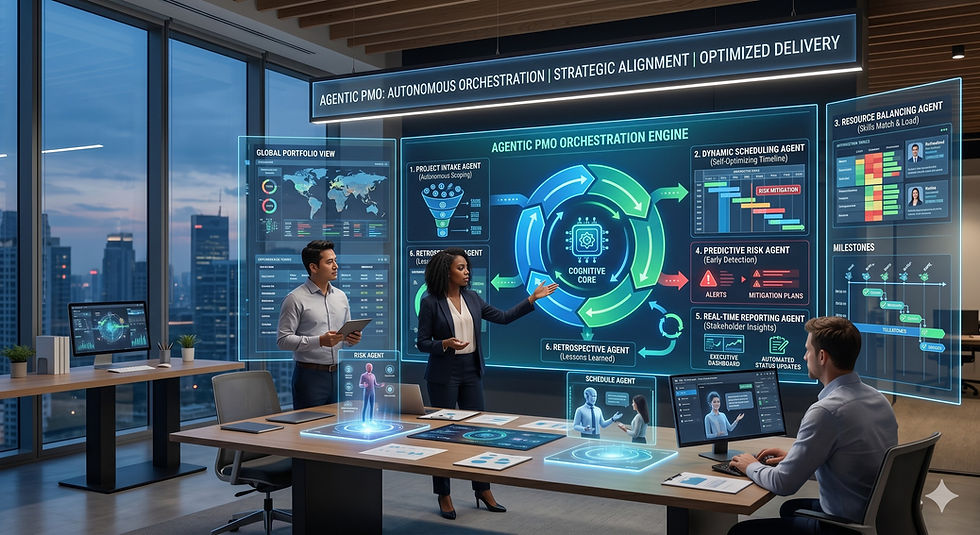
Top 7 Strategies for Implementing Agentic AI Workflows in High-Growth PMOs

High-growth Project Management Offices (PMOs) are increasingly turning to innovative technologies to stay ahead. One such advancement is "Agentic AI," a form of artificial intelligence that operates autonomously to assist in decision-making and process optimization. This article will explore the top seven essential strategies for orchestrating Agentic AI workflows, empowering PMOs to achieve remarkable operational efficiency and enhance project outcomes.

Understanding Agentic AI in High-Growth PMOs Today
Agentic AI is more than just a buzzword; it represents a paradigm shift in how PMOs operate. At its core, Agentic AI refers to intelligent systems capable of performing tasks, making decisions, and learning from data autonomously. For high-growth PMOs, this technology can transform traditional project management practices by minimizing human error, improving data analysis, and accelerating project timelines. By harnessing the power of Agentic AI, PMOs can shift their focus from administrative tasks to strategic initiatives that drive growth.
In the context of high-growth organizations, Agentic AI can facilitate more agile project execution. These AI systems adapt in real-time to project changes, resource availability, and stakeholder feedback, enabling teams to pivot quickly when necessary. Additionally, the ability of Agentic AI to analyze vast amounts of data allows PMOs to uncover insights that were previously hidden, fostering data-driven decision-making that aligns with the organization’s overall strategy.
As PMOs integrate Agentic AI into their operations, they must ensure a solid understanding of its potential and limitations. This includes recognizing that while AI can enhance efficiency and decision-making, human oversight is still crucial. PMOs need to cultivate a culture of collaboration between human intelligence and AI capabilities for optimal results.
Key Benefits of Integrating Agentic AI Workflows
The integration of Agentic AI workflows offers many benefits to high-growth PMOs, starting with improved efficiency. By automating routine tasks such as project tracking and reporting, PMOs can allocate their human resources to higher-value activities, such as strategic planning and stakeholder engagement. This not only streamlines operations but also boosts employee morale as team members focus on more engaging tasks.
Another significant advantage of Agentic AI is enhanced data analysis. Traditional methods of project evaluation often rely on manual data collection and analysis, which can lead to biases and inaccuracies. In contrast, Agentic AI systems can process large datasets quickly and identify patterns that may be overlooked by human analysts. This capability enables PMOs to make informed decisions based on real-time data, ultimately leading to better project outcomes.
Moreover, the adaptability of Agentic AI can significantly reduce project risks. Agentic AI can analyze potential risks and suggest mitigation strategies proactively, allowing PMOs to address issues before they escalate. This foresight not only protects project timelines and budgets but also enhances stakeholder confidence in the PMO's ability to deliver results in a high-growth environment.
Top 7 Strategies for Implementing Agentic AI Workflows in High-Growth PMOs
Understand Agentic AI Capabilities and Limitations
Establish what Agentic AI can automate, where it adds value, and where human oversight is required.
Select the Right Agentic AI Tools for PMO Needs
Evaluate tools based on project types, workflows, integrations, scalability, and organizational requirements.
Implement AI-Driven Project Management Processes
Define objectives, automate routine activities, improve workflows, and introduce AI-supported decision-making.
Build a Collaborative Human + AI Operating Model
Create a culture where teams work alongside AI systems through communication, training, and adoption practices.
Establish AI Governance, Compliance, and Ethical Controls
Create frameworks for responsible AI use, data protection, transparency, accountability, and bias management.
Measure AI Workflow Performance and Business Impact
Track efficiency gains, decision quality, project success rates, user adoption, and ROI.
Continuously Optimize and Scale AI Workflows
Adapt AI processes over time, incorporate emerging technologies, and scale capabilities as the PMO grows.
Identifying the Right Tools for Your PMO Needs
Selecting the right tools to implement Agentic AI workflows is crucial for any PMO looking to optimize its operations. The first step in this process is to evaluate the specific needs of the PMO, including the types of projects managed, team dynamics, and existing workflows. Different AI tools offer various features, so understanding these requirements will help PMOs choose a solution that aligns with their objectives.
Next, PMOs should consider tools that integrate seamlessly with existing project management software.
Successful implementation often hinges on how well the new AI tool complements current systems, as a disjointed approach can lead to confusion and inefficiencies. Look for platforms that offer APIs and integrations with tools already in use, enabling a smoother transition and maximizing the utility of both systems.
Finally, it’s essential to assess the scalability of the AI tools being considered. High-growth PMOs need solutions that can evolve as the organization expands, accommodating an increasing volume of projects and teams. By opting for scalable AI tools, PMOs can ensure that their investment continues to deliver value over the long term, supporting a dynamic and growth-oriented environment.
Best Practices for Implementing AI-Driven Processes
Implementing AI-driven processes within a PMO requires careful planning and execution. First and foremost, it’s vital to establish clear objectives for what the PMO aims to achieve with Agentic AI. Whether the goal is to enhance efficiency, improve decision-making, or reduce risks, having well-defined objectives will guide the implementation process and help measure success.
Another best practice is to involve all stakeholders in the implementation process. From project managers to team members, everyone should have a voice in how Agentic AI will be utilized. This inclusive approach fosters buy-in and encourages collaboration, ensuring that the AI tools meet the actual needs of the team. Regular workshops and training sessions can also help familiarize users with the new technology, alleviating fears and resistance to change.
Finally, it’s important to iterate and adapt the AI-driven processes continuously. After initial implementation, PMOs should monitor performance closely and gather feedback from users. This information can guide adjustments to the workflows, enhancing the effectiveness of the AI systems over time. By fostering a culture of continuous improvement, PMOs can maximize the benefits of Agentic AI.
Building a Collaborative Culture for AI Adoption
Creating a collaborative culture is essential for the successful adoption of Agentic AI within a PMO. One key aspect of this is fostering open communication about the role of AI and its potential impacts on team dynamics. By addressing concerns and highlighting the benefits of AI, PMOs can create a more receptive environment for change. Regular meetings and updates can help keep everyone informed and engaged in the transformation process.
Encouraging cross-functional collaboration is another critical component. AI workflows can benefit from diverse perspectives and expertise, so promoting teamwork between departments can lead to richer insights and more innovative solutions. Initiatives such as interdepartmental brainstorming sessions can stimulate collaboration and ensure that different viewpoints are considered during the implementation of AI tools.
Additionally, PMOs should invest in training and skill development for team members to equip them with the necessary knowledge and capabilities to work alongside AI systems. By offering workshops and educational resources, PMOs can empower employees to harness the full potential of Agentic AI, ensuring they feel valued and capable of contributing to the PMO's success in a high-growth environment.
Ensuring Compliance and Ethical Use of AI
As the use of Agentic AI in PMOs grows, so too does the importance of ensuring compliance and ethical considerations are at the forefront. First, PMOs must familiarize themselves with the legal frameworks and regulations governing AI in their respective industries. This includes understanding data privacy laws and compliance requirements to safeguard sensitive information during AI processing.
Moreover, ethical considerations should also be a priority. The deployment of AI systems can raise concerns about bias and fairness in decision-making. PMOs have a responsibility to ensure that the algorithms powering their AI tools are transparent and equitable. This means regularly auditing AI models and data inputs to identify and mitigate any biases that could skew results and adversely affect project outcomes.
Finally, establishing a governance framework for AI use can help PMOs uphold compliance and ethical standards. This framework should outline best practices regarding data usage, algorithm transparency, and accountability measures. By proactively addressing compliance and ethical issues, PMOs can create a robust foundation for their Agentic AI initiatives, ultimately enhancing stakeholder trust and confidence.
Measuring Success: Metrics for AI Workflow Efficiency
Measuring the success of Agentic AI workflows in a PMO is critical for understanding their impact and driving future improvements. One of the first metrics to consider is the time saved on routine tasks. By tracking the reduction in time spent on administrative duties due to AI automation, PMOs can quantify the efficiency gains achieved through AI integration. This metric helps justify the investment in AI tools and showcases their value to stakeholders.
Another essential metric is the quality of decision-making. PMOs can analyze the rate of project success before and after implementing AI workflows to determine whether the technology enhances decision quality. Metrics such as project completion rates, budget adherence, and stakeholder satisfaction scores can provide valuable insights into the effectiveness of AI systems in driving positive project outcomes.
Additionally, measuring user engagement and satisfaction with the AI tools is crucial. Conducting surveys and gathering feedback from team members can reveal insights into how well the AI systems are being utilized and whether any barriers to adoption exist. By regularly assessing these metrics, PMOs can fine-tune their AI workflows and ensure they continue to meet the evolving needs of the organization.
Future Trends in Agentic AI and PMO Development
Looking ahead, several trends are shaping the future of Agentic AI in PMO development. One such trend is the increasing integration of AI with other emerging technologies, such as machine learning and blockchain. This convergence enables PMOs to access even deeper insights and enhance the security and transparency of AI-driven processes, fostering trust among stakeholders.
Another significant trend is the rise of AI-driven predictive analytics. As AI systems become more sophisticated, they will increasingly be able to forecast project outcomes based on historical data. This capability will allow PMOs to make proactive decisions, mitigate risks, and allocate resources more effectively, ultimately leading to improved project success rates.
Finally, as organizations strive for sustainability, the role of AI in promoting environmentally conscious project management is gaining traction. PMOs can leverage Agentic AI to assess the environmental impact of projects and suggest greener alternatives, aligning their operations with corporate sustainability goals. By staying ahead of these trends, high-growth PMOs can position themselves as leaders in the effective use of Agentic AI.
Conclusion - Agentic AI workflows
Orchestrating Agentic AI workflows within high-growth PMOs is not just an option; it is becoming a necessity for organizations looking to thrive in a competitive landscape. By understanding the core aspects of Agentic AI, integrating it effectively, and fostering a collaborative culture, PMOs can unlock incredible efficiencies and strategic advantages. As we look to the future, staying informed of trends and continuously measuring success will further solidify the role of Agentic AI as an indispensable tool in the modern PMO.