
Project Escalation vs Issue Management: How Leaders Resolve Problems Before They Impact Delivery

In project management, challenges are often inevitable. Whether you're dealing with a burgeoning budget, a looming deadline, or the complexities of team dynamics, the ability to manage problems effectively can make or break a project.
Two critical strategies in this arena are project escalation and issue resolution. While they might seem similar at first glance, they serve different purposes and require distinct approaches. Understanding the nuances between these two methods is essential for any organization looking to navigate challenges successfully and maintain momentum toward their goals.
Understanding Project Escalation: What You Need to Know
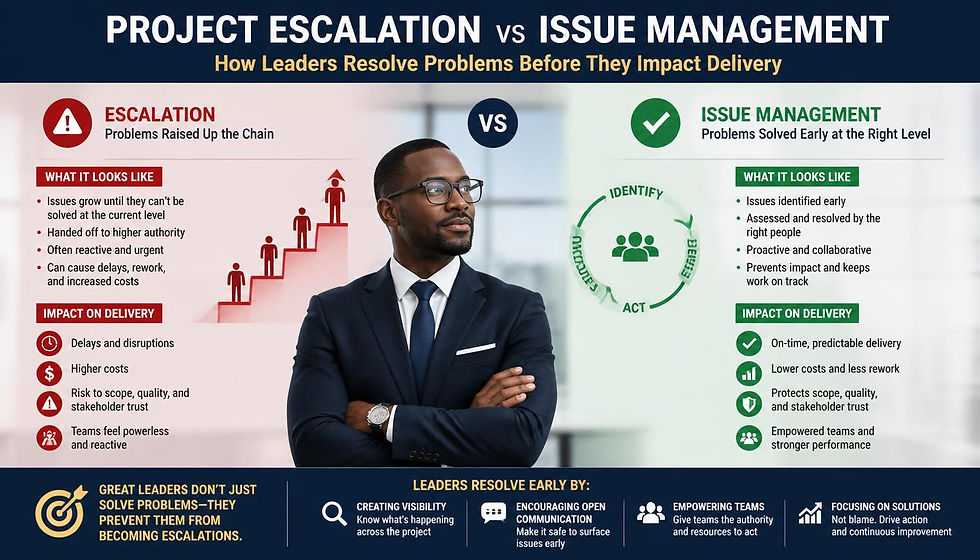
Project escalation refers to the process of bringing a problem to the attention of higher management or stakeholders when it becomes too complex or critical for the project team to resolve. This step is often necessary when the issue exceeds the project manager's authority, necessitating intervention from senior-level executives to facilitate a resolution. For instance, if a project is at risk of exceeding its budget due to unforeseen circumstances, the project manager must escalate the issue to secure additional funding or resources.
The primary goal of escalation is to ensure that significant risks or obstacles are addressed promptly. By elevating the issue to higher management, the organization can leverage broader resources, expertise, and decision-making capabilities to tackle the problem. This might include reallocating resources, adjusting timelines, or even re-evaluating project scopes. Effective escalation not only resolves immediate issues but also enhances organizational learning by identifying patterns that could lead to similar challenges in the future.
However, escalation should not be the first resort. It can lead to a culture of dependency on higher management for problem-solving, which could undermine the project team's confidence and autonomy. Establishing a clear escalation process, with defined thresholds for when to escalate, can help maintain a balance between empowering teams and ensuring that critical problems receive the attention they deserve.
The Role of Issue Resolution in Project Management
Issue resolution is a more hands-on approach that focuses on identifying, analyzing, and addressing problems as they arise within a project. It encompasses a range of strategies and techniques aimed at mitigating risks and ensuring that project objectives are met without necessarily involving higher management. The emphasis here is on proactive problem-solving, which requires a thorough understanding of project intricacies and the ability to mobilize team resources effectively.
Effective issue resolution begins with the identification of potential problems early in the project lifecycle. This can be achieved through regular team meetings, risk assessments, and open communication channels. Once an issue is identified, the team collaboratively develops solutions, which can include brainstorming sessions, root cause analysis, and leveraging team members' expertise. The goal is to resolve the issue swiftly and efficiently, minimizing disruption to the project timeline and budget.
Moreover, a strong issue resolution process can foster a collaborative environment where team members feel empowered to voice concerns and contribute to solutions. This can lead to increased morale and a sense of ownership, ultimately resulting in a more engaged team and a higher likelihood of project success. Building a culture that prioritizes issue resolution helps organizations not only in overcoming immediate challenges but also in equipping teams with the skills and mindset needed to tackle future obstacles.
Key Differences Between Escalation and Issue Resolution
While project escalation and issue resolution are both vital components of effective project management, they differ significantly in approach and execution. Escalation typically involves raising an issue to a higher authority, while issue resolution emphasizes solving problems at the team level. Understanding these distinctions is key to leveraging both strategies effectively.
One of the primary differences lies in the level of authority involved. Escalation requires the involvement of senior management, which can lead to a slower resolution process as decisions may take longer to be made at higher levels. In contrast, issue resolution is more immediate, allowing project teams to implement solutions on the spot without waiting for approvals from upper management.
Additionally, the contexts in which these two approaches are applied often differ. Escalation is used for critical issues that may jeopardize the project's success, while issue resolution focuses on day-to-day challenges that arise. By recognizing when to escalate versus when to resolve issues internally, project managers can enhance their effectiveness and ensure that problems are managed in a timely manner.
When to Escalate: Signs Your Project Needs Attention
Recognizing the signs that a project needs escalation is crucial for maintaining momentum and achieving success. One common indicator is a significant deviation from the project timeline or budget. If a project is running behind schedule or exceeding its financial limits, it may be time to escalate the matter to higher management for intervention. This could involve reassessing project goals, acquiring additional resources, or implementing changes to the original plan.
Another sign that escalation is necessary is the presence of unresolved conflicts within the team or between stakeholders. If interpersonal dynamics are hindering progress and internal resolution efforts have failed, involving higher management may provide the necessary authority to mediate and facilitate a resolution. Conflict can arise from differing priorities, miscommunication, or unclear roles, and addressing these issues promptly can prevent long-term damage to the project.
Lastly, any indication that the project is at risk of failing to meet its objectives should prompt escalation. Whether it's due to resource limitations, technical challenges, or stakeholder disengagement, recognizing these red flags early on allows for timely intervention and appropriate corrective measures. By keeping an eye on these signs, project managers can effectively determine when escalation is warranted to safeguard project success.
Effective Strategies for Resolving Issues Promptly
To effectively resolve issues within a project, teams must adopt a systematic approach that promotes quick identification and action. One effective strategy is the implementation of regular check-ins and progress reviews, which help teams to spot potential issues before they escalate. By fostering open communication and encouraging team members to share concerns, project managers can create a collaborative environment where problems are addressed proactively.
Another strategy involves leveraging data and analytics to inform decision-making. Utilizing project management software can provide real-time insights into project performance, helping teams to identify trends and potential issues early. For instance, tracking key performance indicators (KPIs) can reveal areas where the project may be deviating from its planned course, allowing teams to address these issues before they become critical.
Additionally, fostering a culture of continuous improvement can significantly enhance issue resolution. Encouraging team members to learn from past experiences and apply those lessons to current challenges promotes resilience and adaptability within the team. Implementing regular post-mortem reviews can help identify the root causes of issues, enabling teams to develop better strategies for addressing similar problems in the future.
The Impact of Communication on Problem Management
Effective communication is the cornerstone of successful problem management. It facilitates collaboration, ensures that all team members are aligned, and helps to prevent misunderstandings that could lead to conflicts. Project managers must establish clear communication channels to ensure that issues are reported and discussed promptly. This includes utilizing tools such as project management software, instant messaging, or regular stand-up meetings to keep everyone informed and engaged.
Moreover, transparent communication is crucial when it comes to managing stakeholder expectations. Keeping stakeholders informed about potential issues and the steps being taken to resolve them can help build trust and minimize resistance. By maintaining an open dialogue, project managers can ensure that everyone is on the same page and that solutions are developed collaboratively, rather than imposed unilaterally.
Lastly, feedback loops are an essential component of effective communication. Creating an environment where team members feel comfortable providing feedback on project processes and problem management techniques can lead to valuable insights. This continuous flow of information not only aids in resolving current issues but also equips the team with the knowledge and skills to handle future challenges more effectively.
Building a Culture of Proactive Problem Solving
A proactive approach to problem-solving is essential for organizations that wish to thrive in a complex project landscape. Building a culture that prioritizes proactive problem-solving starts with leadership buy-in. Senior management must champion this mindset and model behavior that encourages team members to take initiative when facing challenges. This commitment from the top can motivate employees to embrace proactive problem-solving as a core value.
Training and development also play a vital role in fostering a proactive culture. Providing team members with the tools and skills they need to identify and address problems can empower them to act decisively. Workshops focused on problem-solving techniques, conflict resolution skills, and risk management strategies can enhance team capabilities, ensuring that issues are addressed before they escalate.
Finally, recognizing and rewarding proactive behavior can reinforce this culture. Celebrating team members who successfully identify and resolve issues, or who contribute innovative solutions to challenges, can inspire others to adopt a similar mindset. By creating an environment that values and rewards proactive problem-solving, organizations can enhance their resilience and adaptability in the face of project challenges.
Conclusion
Understanding the distinctions between project escalation and issue resolution is vital for effective problem management. Both strategies have their place within a project's lifecycle, and knowing when to apply each can significantly impact project outcomes.
By fostering a culture of proactive problem-solving and effective communication, organizations can navigate challenges more smoothly, ensuring that projects stay on track and achieve their intended goals. Emphasizing the importance of these skills will not only contribute to immediate project success but also build a stronger foundation for future initiatives.


