How to Write a Reflective Essay on a Project Management Course

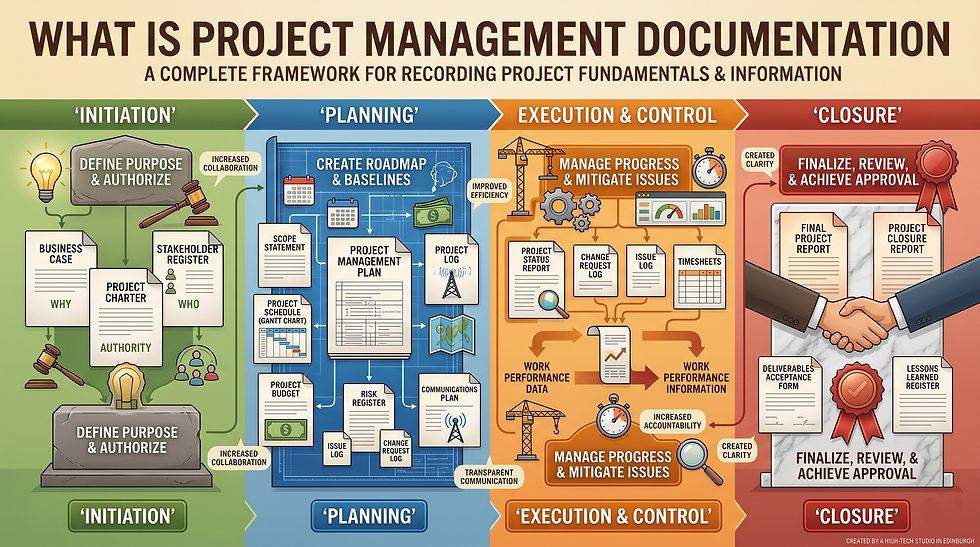
A project management course can feel strangely practical and personal at the same time. On paper, it teaches planning, scheduling, risk control, stakeholder communication, and team coordination. In reality, it often shows students how they react under pressure, how they handle unclear instructions, whether they listen properly, and how quickly a neat plan falls apart when people start behaving as people do.
That is why writing a reflective essay on project management course experience is not the same as summarizing lecture notes. The student is not just proving that they understand Gantt charts or Agile methods. They are showing what the course revealed about their thinking, habits, decisions, and growth. writeanypapers custom writing help supports students who need clearer direction when turning course experience into structured academic reflection.
The difficult part is that reflection cannot be borrowed from a textbook. A student may understand risk management perfectly in theory and still ignore an obvious risk during a group task. That gap between knowing and doing is exactly where a good reflection begins.
Essay Pay provides academic writing support for students who need help organizing reflective assignments around personal learning, course concepts, and future action. Still, the strongest reflection should begin with one thing no outside support can replace well: honest observation.
What a Project Management Reflection Is Really About
It is not a diary entry, though it may contain personal experience. It is not a report, though it may discuss course concepts. It sits somewhere between analysis and self-questioning.
A good project management reflective essay usually answers three questions:
What happened during the course or project?
What did the student learn from that experience?
How will that learning affect their future academic, professional, or personal behavior?
For example, a student may write about managing a group assignment where one member missed deadlines. A weak reflection says, “This taught the importance of teamwork.” A stronger reflection asks why the delay affected the group so much, how communication failed, what leadership choices were avoided, and what could be done differently next time.
Start With a Real Moment, Not a Definition
Many students begin with a textbook sentence: “Project management is the process of planning and controlling resources to achieve goals.” It is not wrong, but it sounds flat.
A better opening may begin with a small moment from the course. Perhaps the group thought the project was under control until the final week. Perhaps the student avoided taking responsibility because another teammate seemed more confident. The opening does not need drama. It needs truth.
For example:
During the first weeks of the course, the student assumed project management was mostly about structure. By the end, it became clear that structure only works when people communicate honestly and early enough.
This kind of opening creates room for reflection. It also moves beyond surface learning.
Use a Reflective Model Without Letting It Take Over
Students often ask how to write a reflective essay on project management without sounding too mechanical. Reflective models can help, but they should not dominate the whole essay.
Reflective Model | Best Use in the Essay |
Gibbs’ Reflective Cycle | Describing an experience, feelings, evaluation, analysis, conclusion, and action plan |
Kolb’s Learning Cycle | Connecting experience, reflection, theory, and future experimentation |
Schön’s Reflection Theory | Discussing decisions made during action and after action |
Gibbs’ Reflective Cycle is common in universities because it gives students a clear structure. Still, the essay should not announce every stage too loudly. A more natural approach is to use the model quietly. The essay can move from experience to analysis to future learning without naming every step.
Connect Personal Experience to Project Management Concepts
A reflective essay becomes academic when the student links personal experience to course material. This is where many essays become too general. They mention leadership, communication, and risk management, but they do not explain how those ideas appeared in the actual project.
A strong reflective essay on project management course should include specific concepts such as:
project lifecycle
scope management
stakeholder expectations
team communication
risk identification
leadership style
Agile or Waterfall methodology
conflict resolution
For instance, if the student’s group struggled because tasks were unclear, the essay can connect that problem to scope definition or work breakdown structure. If a team member misunderstood the goal, the reflection can discuss stakeholder communication. If the project changed midway, the student might reflect on Agile flexibility compared with rigid planning.
Real project management is rarely clean. Companies such as Microsoft, Toyota, and NASA have had projects where communication, risk, and planning shaped the final outcome. In a classroom project, the stakes are smaller, but the patterns are surprisingly similar.
Discuss What Went Wrong Without Blaming Everyone
A mature project management course reflection does not pretend everything went perfectly. In fact, the most interesting part of reflection is often failure, confusion, or discomfort.
The student may write about:
underestimating the time required for research
not speaking up during group decisions
assuming everyone understood the task
failing to track progress consistently
depending too much on one strong team member
ignoring early signs of conflict
The key is responsibility. A reflective essay should not turn into a complaint about lazy classmates or unclear teachers. Even if those things were partly true, the student still needs to ask: What was within their control?
For example:
The student initially blamed the team’s delay on poor participation from others. However, the reflection showed that no clear check-in system had been agreed upon. The problem was not only motivation. It was also a lack of structure.
That kind of sentence shows growth. It does not excuse the problem, but it examines it properly.
Include Feelings, But Keep Them Useful
Reflective writing allows emotional honesty. A student can mention feeling anxious, frustrated, overconfident, embarrassed, or surprised. However, feelings should lead somewhere.
Writing “the student felt stressed” is not enough. The essay should explain what the stress revealed. Did it show weak planning? Fear of leadership? Poor communication habits? A tendency to avoid conflict?
In a project management reflection paper, emotions are evidence. They show how the student responded to uncertainty. That matters because project managers often deal with pressure, unclear expectations, and competing demands.
Build the Essay Around a Clear Structure
A simple structure works best:
Section | What to Include |
Introduction | Course experience and the main lesson learned |
Description | Brief explanation of the project, task, or activity |
Analysis | What worked, what failed, and why |
Personal Learning | How the student’s understanding changed |
Future Application | How the lesson will affect future projects or work |
This structure keeps the essay from becoming a loose memory of the course. It gives the reflection a spine. The student can still sound natural, but the reader will not get lost.
Use Evidence Without Making the Essay Too Formal
A reflective essay can include academic sources, but it should not become a literature review. A few references to recognized ideas are enough. For example, the student may mention the Project Management Institute, which publishes the PMBOK Guide, or refer to Agile principles used by software teams at companies such as Spotify or Atlassian.
Still, the student’s own analysis should remain central. The reader wants to see thinking, not a stack of quotations.
Avoid the Most Common Mistakes
Many students lose marks because they write a summary instead of a reflection. Others become too personal and forget the academic purpose.
Common mistakes include:
describing the course week by week with no analysis
using project management terms without applying them
blaming teammates without self-reflection
writing in a vague way about “skills” and “growth”
ignoring future action
making the essay sound too perfect
Perfection is suspicious in reflective writing. Real learning usually has rough edges. A student who admits uncertainty often sounds more believable than one who claims every challenge became a life-changing lesson.
Example of a Strong Reflective Point
A weak sentence might be:
The course taught the student that communication is important.
A stronger version:
The course showed that communication is not just frequent messaging. In the group project, messages were exchanged often, but decisions were still unclear. The student realized that effective communication in project management requires confirmation, responsibility, and written agreement, not just activity.
This is more specific. It also connects experience to a broader project management lesson.
What the Student Should Take Forward
A reflective essay on a project management course should not sound as if the student is trying to impress the tutor with perfect wisdom. It should show a real learning process. Some parts may be practical: schedules, roles, deadlines, risks. Other parts may be uncomfortable: hesitation, conflict, poor assumptions, silence during meetings.
Project management is not only about finishing a task. It is about understanding how work moves through people, pressure, mistakes, and decisions. A strong reflective essay captures that movement. It shows that the student did not just complete the course. They noticed what the course exposed about them.