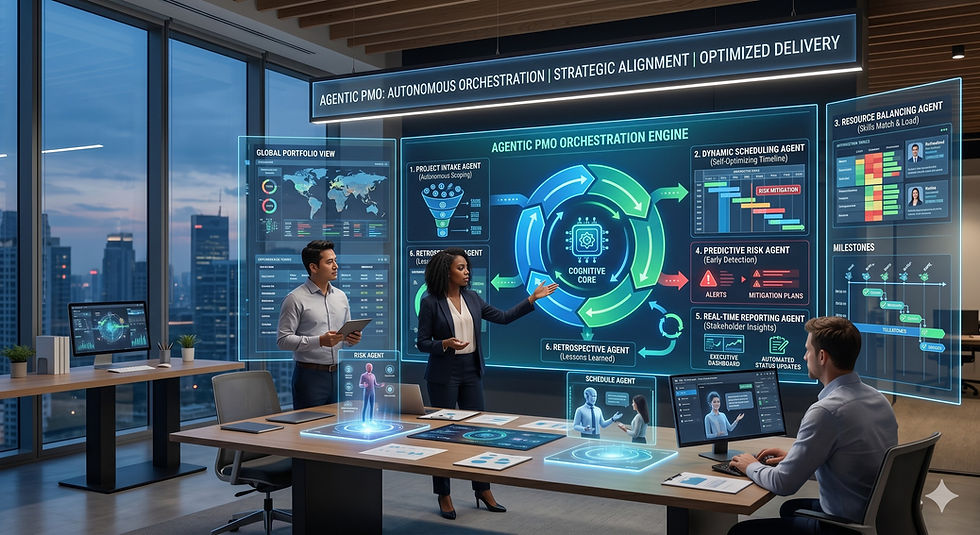
Agile PMOs: The High-Performance Operating Model for Enterprise Delivery

In project management, the concept of the Agile Project Management Office (PMO) has been undergoing a significant transformation. As organizations strive for faster delivery, improved collaboration, and enhanced adaptability, the traditional PMO model has become increasingly outdated.
In 2026, a reimagined Agile PMO operating model will emerge, characterized by high performance and a focus on delivering value. This article explores the vision for Agile PMOs, highlighting key trends, essential traits, cultural transformations, and the tools necessary for success. Explore further insights on Agile PMO's

Overview of the Vision
The Agile PMO will be distinctly different from its predecessors, prioritizing flexibility and responsiveness over rigid structures. It will function as a strategic partner rather than just a governance body, enabling organizations to embrace the fast-paced changes in technology and market demands.
This new model will foster an environment where cross-functional teams thrive, breaking down silos and encouraging innovation. By aligning closely with business objectives, the Agile PMO will ensure that projects not only meet timelines but also deliver tangible results.
Moreover, the Agile PMO will leverage data-driven insights to inform decision-
making processes. With advanced analytics and real-time reporting capabilities, PMOs will be able to monitor project performances dynamically and adjust strategies accordingly.
This shift towards a more analytical approach will empower stakeholders with timely information, enabling swift responses to emerging challenges.
Consequently, organizations will find themselves better equipped to navigate complexities and uncertainties in their project portfolios.
Finally, the concept of continuous improvement will be at the heart of the Agile PMO's operations. By fostering a culture of learning and adaptability, teams will be encouraged to experiment and innovate, drawing lessons from both successes and failures.
This iterative approach will help organizations to refine processes, enhance collaboration, and ultimately increase project success rates.
Key Trends Shaping Agile PMOs in the Coming Years
Several key trends are influencing the evolution of Agile PMOs as we approach 2026. First, the integration of Artificial Intelligence (AI) and machine learning is set to revolutionize project management practices.
These technologies will help automate routine tasks, analyze vast amounts of data, and provide predictive insights that can significantly enhance decision-making. As a result, PMOs will be able to focus on more strategic initiatives rather than merely managing administrative duties.
Another trend is the growing emphasis on remote and hybrid work environments. The COVID-19 pandemic accelerated the shift towards flexible work arrangements, and this shift is here to stay.
Agile PMOs will need to adapt by implementing tools and practices that facilitate collaboration among distributed teams. This may include leveraging digital platforms that support asynchronous communication and project tracking, allowing teams to work seamlessly regardless of their location.
Lastly, sustainability will become a central theme for Agile PMOs as organizations increasingly prioritize their social and environmental responsibilities.
The PMO will play a crucial role in ensuring that projects align with sustainability goals, driving initiatives that not only deliver economic value but also contribute to the greater good. This trend will require PMOs to adopt innovative practices that consider the long-term impacts of project outcomes.
Essential Traits of a High-Performance Agile PMO
To thrive in the fast-paced environment of 2026, a high-performance Agile PMO will possess several essential traits. One of the most important characteristics will be adaptability.
Agile PMOs must be flexible in their approach, ready to pivot strategies and processes as business needs evolve. This adaptability will not only enhance project outcomes but will also inspire confidence among stakeholders who appreciate a PMO that can respond to changing circumstances.
Collaboration will also be a defining trait of successful Agile PMOs. By fostering a culture of teamwork and open communication, PMOs will encourage cross-functional collaboration that leverages diverse perspectives. This collaborative environment will break down traditional hierarchies, allowing agile teams to collectively problem-solve and innovate. As a result, organizations will benefit from enhanced creativity and faster problem resolution.
Lastly, a high-performance Agile PMO will prioritize value delivery over mere project completion. This mindset shift will necessitate a focus on outcomes rather than outputs, ensuring that projects are aligned with strategic business goals.
By continuously assessing the value generated by each initiative, PMOs can make informed decisions about resource allocation and project prioritization, ultimately driving greater success across the organization.
Transforming Culture: The Heart of Agile PMOs
Cultural transformation will be pivotal for the success of Agile PMOs by 2026. Creating a culture that embraces agility requires a shift in mindset at all levels of the organization.
Leaders must champion this transformation by modeling agile behaviors and encouraging their teams to adopt a growth mindset. This involves embracing failure as a learning opportunity and nurturing an environment where experimentation is encouraged.
Furthermore, empowering teams to take ownership of their work will be crucial. Agile PMOs must foster an environment where team members feel empowered to make decisions and take risks. This decentralization of authority will not only enhance engagement but will also accelerate the delivery of results. When teams are trusted to manage their own projects, they are likely to innovate and devise solutions that align closely with customer needs and business objectives.
Lastly, promoting transparency and open communication will be essential for cultivating an agile culture. Agile PMOs should implement regular check-ins and feedback loops to keep everyone aligned and informed. By encouraging candid discussions about challenges and successes, organizations foster a sense of camaraderie and shared purpose among teams, ultimately leading to better project outcomes.
Tools and Technologies Driving Agile PMOs Forward
The tools and technologies that support Agile PMOs will play a critical role in their effectiveness in 2026. Cloud-based project management platforms will become essential, allowing teams to collaborate seamlessly in real-time, regardless of their physical locations.
These platforms will provide integrated functionalities such as task management, resource allocation, and progress tracking, enabling Agile PMOs to maintain a comprehensive overview of project statuses.
Additionally, leveraging advanced analytics tools will be vital for data-driven decision-making. By utilizing dashboards and reporting tools that provide actionable insights, PMOs will be equipped to monitor key performance indicators (KPIs) continuously. These insights will help identify trends, assess risks, and optimize resource allocation, ultimately leading to more informed strategic planning.
Moreover, the integration of automation tools will significantly enhance efficiency. PMOs can automate repetitive tasks such as reporting, status updates, and scheduling, freeing team members to focus on higher-value activities. By embracing automation, Agile PMOs will increase productivity while reducing the likelihood of human error, thereby enhancing overall project performance.
Building Agile Teams: Skills for Future Success
As organizations transition to an Agile PMO model, the skills required for team members will evolve significantly. First and foremost, strong communication skills will be paramount. Agile teams must collaborate effectively, sharing ideas and feedback openly to drive innovation. Team members who can articulate their thoughts clearly and listen actively will contribute to a more cohesive working environment.
Analytical skills will also be increasingly important. Team members will need to interpret data and insights to inform their decision-making processes.
The ability to analyze project performance, assess risks, and identify opportunities for improvement will empower teams to make informed choices that enhance project outcomes.
Finally, adaptability and resilience will be essential traits for Agile team members.
As the pace of change accelerates, individuals must be able to pivot quickly, embracing new challenges and learning from their experiences. Organizations should invest in training and development programs to foster these skills, ensuring that team members are well-prepared to navigate the complexities of the future.
Navigating Challenges in Agile PMO Implementations
Despite the numerous benefits associated with Agile PMO implementations, organizations may encounter several challenges along the way.
Resistance to change is one of the most common hurdles, as individuals accustomed to traditional project management practices may be hesitant to embrace new methodologies.
To overcome this resistance, effective change management strategies are critical. Organizations should communicate the benefits of Agile practices clearly, demonstrating how these changes can lead to improved outcomes.
Another challenge lies in aligning the Agile PMO with organizational goals. Ensuring that the PMO is not viewed as a separate entity but rather as an integral part of the business strategy is essential.
This alignment requires ongoing collaboration between PMO leaders and business stakeholders to establish shared objectives and KPIs that reflect both project and organizational success.
Finally, maintaining a consistent Agile culture across all levels of the organization can be difficult. It requires continuous reinforcement of Agile principles and practices.
Leadership must actively support and promote Agile behaviors, ensuring that teams feel empowered to adopt and adapt Agile methodologies in their daily work. By nurturing a consistent Agile culture, organizations can enhance their chances of successfully implementing a high-performance Agile PMO.
Real-World Case Studies: Agile PMOs in Action
Several organizations have successfully implemented Agile PMOs, showcasing the transformative potential of this approach. For instance, a leading technology company transitioned to an Agile PMO model to improve the speed and quality of its product development processes.
By leveraging cross-functional teams and data-driven decision-making, the organization reduced its time-to-market by 30 percent while simultaneously increasing customer satisfaction ratings.
Another notable example comes from a multinational financial services firm that adopted an Agile PMO to enhance its response to compliance requirements. By integrating Agile practices, the PMO improved collaboration among regulatory teams and streamlined compliance-related projects.
This resulted in a significant reduction in project delivery times and increased transparency, leading to higher levels of stakeholder trust.
In the healthcare sector, a major hospital network implemented an Agile PMO to optimize its project management for IT initiatives. By fostering a culture of collaboration and open communication, the organization was able to enhance its operational efficiency.
As a result, the hospital network successfully rolled out new patient care technologies ahead of schedule, improving overall patient outcomes and satisfaction.
Conclusion - Agile PMOs: The High-Performance Operating Model for Enterprise Delivery
The transformation of Agile PMOs represents a significant opportunity for organizations to enhance their project management practices. By embracing adaptability, collaboration, and a culture of continuous improvement, PMOs can drive value and success in an increasingly complex business environment.
By leveraging innovative tools, fostering skilled teams, and navigating challenges, organizations can position themselves for a bright future with high-performance Agile PMOs at the forefront.