10 Value Stream Leadership Practices That Boost Project Outcomes

In business, effective project management is crucial for achieving desired outcomes. Value stream leadership practices can significantly enhance project performance, improve team dynamics, and foster a culture of continuous improvement.
This article delves into ten essential leadership practices that can help organizations streamline their projects, boost outcomes, and increase overall efficiency. Here, we will explore how these practices can be implemented in large enterprises to create a more productive work environment.

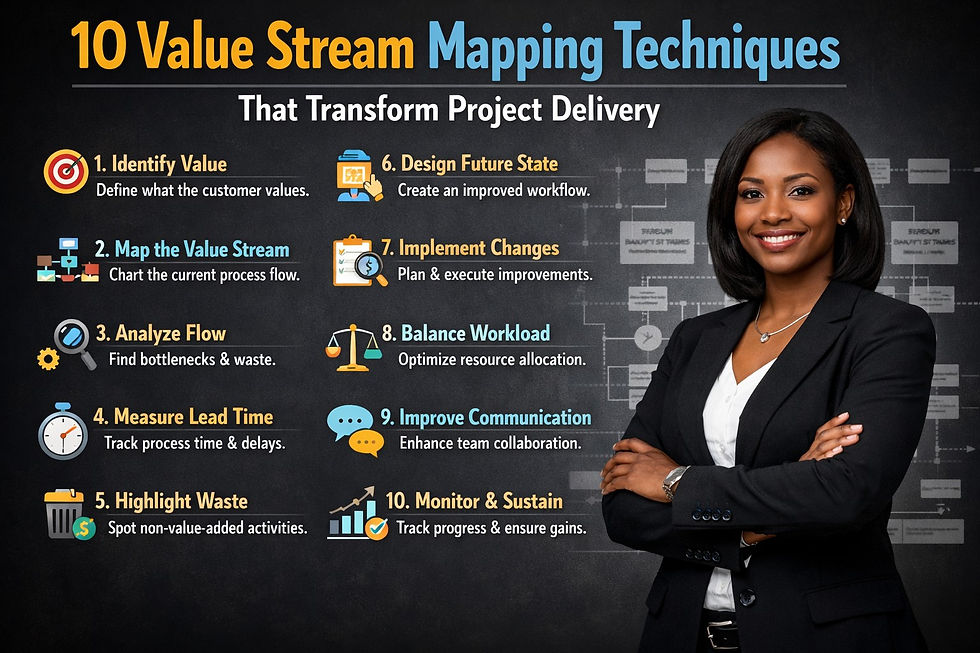
10 Value Stream Leadership Practices
Mapping value streams to understand how each team and function contributes to end-to-end project delivery
Eliminating non-value-adding activities to streamline workflows and improve efficiency
Aligning organizational resources directly with project and strategic objectives
Identifying and removing bottlenecks across the project lifecycle to accelerate flow
Engaging teams to build a shared vision of how value is delivered across the system
Maintaining a long-term focus on sustainable process improvement, not just short-term delivery
Embedding clear, consistent communication channels across teams and departments
Actively listening to team feedback to improve decision-making and collaboration
Promoting continuous improvement through regular workflow reviews and retrospectives
Using metrics and KPIs to track performance, guide decisions, and improve project outcomes
Understanding Value Stream Leadership in Project Management
Value stream leadership focuses on optimizing the flow of value through the various stages of a project. In large organizations, this means understanding how each team and department contributes to the overall objectives. Leaders must map out the value streams, identifying key activities that add value and eliminating those that do not. This clarity allows organizations to align their resources effectively and ensure that every effort is contributing to the project's success.
Moreover, value stream leadership requires a comprehensive understanding of the end-to-end process, from initiation to completion. Leaders should engage actively with teams to uncover bottlenecks that may hinder progress and to find opportunities for enhancement. By doing so, they create a shared vision around how best to execute projects, driving collective ownership and commitment towards achieving successful outcomes.
Finally, value stream leadership promotes a long-term perspective. While it’s essential to meet short-term deadlines, leaders should also focus on building sustainable processes that can deliver value over time. This means investing in employee training, technology, and process improvements, ultimately leading to a more resilient organization capable of adapting to changing market demands.
The Importance of Clear Communication in Leadership
Clear communication is the backbone of effective project management. In large organizations, where multiple teams may be involved, miscommunication can lead to costly delays and misunderstandings. Leaders must establish clear channels for communication and ensure that everyone is on the same page regarding project goals and expectations. This involves not only sharing information but also actively listening to team feedback and concerns.
Furthermore, leaders should foster an environment where open dialogue is encouraged. Regular check-ins, team meetings, and open-door policies can help facilitate better communication. It’s vital for leaders to set the tone, demonstrating that everyone’s input is valued. This creates an atmosphere of trust, allowing team members to voice their thoughts and contribute to the project's success.
Moreover, utilizing modern communication tools can greatly enhance clarity and efficiency. Collaboration platforms can keep teams connected, enabling real-time updates and information sharing. By leveraging these tools, leaders can ensure that everyone has access to the information they need when they need it, ultimately driving better project outcomes.
Embracing Continuous Improvement for Better Results
Incorporating continuous improvement practices into project management can yield remarkable results. Lean methodologies, for example, focus on identifying waste and enhancing efficiency. Leaders can instill a mindset of continuous improvement within their teams by encouraging them to regularly assess project workflows and identify areas for enhancement. This proactive approach not only boosts productivity but also fosters a culture of innovation.
Another aspect of continuous improvement is incorporating feedback loops. Regular reviews and retrospectives allow teams to reflect on their performance, celebrate successes, and address challenges. By committing to ongoing learning, organizations can adapt their strategies quickly and evolve with market demands, leading to consistently better project outcomes.
Leaders also play a crucial role in modeling continuous improvement behavior. By sharing their own experiences and learnings, they can inspire their teams to embrace this practice. When employees see leadership actively engaging in improvement efforts, they are more likely to take initiative and contribute to a culture that values growth and excellence.
How to Foster a Collaborative Team Environment
Collaboration is essential for achieving project success. In large organizations, fostering a collaborative environment can be challenging but is incredibly rewarding. Leaders should prioritize team-building activities and encourage cross-functional collaboration. By breaking down silos and promoting interdepartmental relationships, organizations can enhance knowledge sharing and foster innovation.
Creating a psychologically safe environment is also vital for collaboration. Team members should feel comfortable expressing their ideas, asking questions, and providing constructive feedback. Leaders can facilitate this by recognizing and celebrating contributions from all team members, reinforcing the idea that every perspective is valuable. This not only strengthens team cohesion but also drives collective problem-solving.
Tools and technologies play a significant role in facilitating collaboration. Utilizing project management software, shared documents, and communication platforms can help streamline teamwork. By equipping teams with the right tools, leaders can enhance collaboration and ensure that team members remain connected and informed throughout the project lifecycle.
Utilizing Metrics to Drive Project Success
Metrics play a vital role in project management by providing quantifiable insights into performance. Leaders should establish key performance indicators (KPIs) that align with project objectives. These metrics can help track progress, identify areas of concern, and make informed decisions. By grounding their leadership in data, they can better navigate challenges and capitalize on opportunities.
Additionally, organizations should embrace a data-driven culture. This involves training team members to understand and interpret project metrics, fostering a sense of ownership and accountability. When teams are equipped to analyze data, they can proactively address issues and implement improvements, leading to more successful project outcomes.
Moreover, regular reporting on metrics can enhance transparency and communication. Sharing these insights with stakeholders keeps everyone informed and engaged in the project, fostering a collaborative atmosphere. By leveraging metrics effectively, leaders can drive their projects forward with clarity and purpose.
The Role of Agile Methodologies in Leadership Practices
Agile methodologies provide a framework that enhances flexibility and responsiveness in project management. Leaders in large organizations can implement Agile practices to encourage adaptive planning and iterative progress. This approach allows teams to respond quickly to changing circumstances and customer feedback, ultimately leading to more successful project outcomes.
An essential aspect of Agile is the emphasis on collaboration and self-organization. Leaders should empower their teams to make decisions and take ownership of tasks. By granting autonomy, leaders can inspire creativity and innovation, allowing teams to explore new solutions and strategies that may not have been initially considered.
Furthermore, Agile methodologies promote regular reflection and adjustment.
Leaders should encourage teams to engage in sprint reviews and retrospectives, where they can assess their performance and identify improvement areas. This ongoing feedback loop ensures that the project remains aligned with its goals and can adapt to any challenges that arise.
Building a Culture of Accountability and Trust
Accountability and trust are crucial components of effective project management. Leaders must cultivate a culture where team members feel responsible for their contributions and have confidence in their colleagues. This begins with setting clear expectations and goals, ensuring that everyone understands their roles and responsibilities.
Moreover, accountability should be reinforced through regular check-ins and performance assessments. Leaders can foster trust by providing constructive feedback and recognizing team members’ achievements. When employees feel valued and supported, they are more likely to take ownership of their work and strive for excellence.
Additionally, transparency is vital in building trust. Leaders should communicate openly with their teams about project developments, challenges, and successes. By sharing information and being forthcoming about decisions, leaders can create an environment where team members feel informed and engaged, ultimately leading to better project outcomes.
Strategies for Effective Stakeholder Engagement and Alignment
Engaging stakeholders effectively is crucial for ensuring project success. Leaders should prioritize identifying key stakeholders early in the project and establishing strong relationships with them. This involves understanding their needs and expectations, as well as involving them in the decision-making process. Building this rapport fosters alignment and ensures that stakeholders are invested in the project's outcomes.
Regular communication is essential for maintaining stakeholder engagement. Leaders should provide updates and solicit feedback throughout the project lifecycle. This not only keeps stakeholders informed but also demonstrates that their input is valued. By actively involving stakeholders, leaders can create a sense of ownership and commitment, ultimately leading to smoother project execution.
Furthermore, leaders should be prepared to address any stakeholder concerns promptly. Listening to feedback and adapting plans as needed demonstrates responsiveness and commitment to stakeholder satisfaction. By mastering stakeholder engagement strategies, leaders can significantly enhance project outcomes and strengthen organizational relationships.
Conclusion - 10 Value Stream Leadership Practices That Boost Project Outcomes
Implementing value stream leadership practices can dramatically boost project outcomes within large organizations. By focusing on clear communication, continuous improvement, collaboration, metrics, Agile methodologies, accountability, and stakeholder engagement, leaders can create an environment conducive to success.
Investing in these practices not only enhances project performance but also builds a stronger, more resilient organization capable of thriving in a competitive landscape.
External Source: For more on value stream mapping and its significance in project management, visit Lean Enterprise Institute.