
Top Project Management Books: Essential Reading for Project Managers

Project management is the foundation of organizational success. Whether leading multimillion-dollar engineering initiatives or digital transformation programs, directors and project leaders rely on proven frameworks and best practices to drive performance, mitigate risk, and achieve strategic goals.
While experience and mentorship are essential, reading remains one of the most effective ways to strengthen project management expertise. The best project management books offer more than academic theory they provide actionable insights, leadership frameworks, and real-world lessons that help professionals navigate complex corporate environments.
This detailed guide explores top project management books that shape how leaders think, plan, and execute at scale. It also discusses how enterprises can use structured reading programs to build PMO maturity, align with governance standards, and foster a culture of continuous learning.
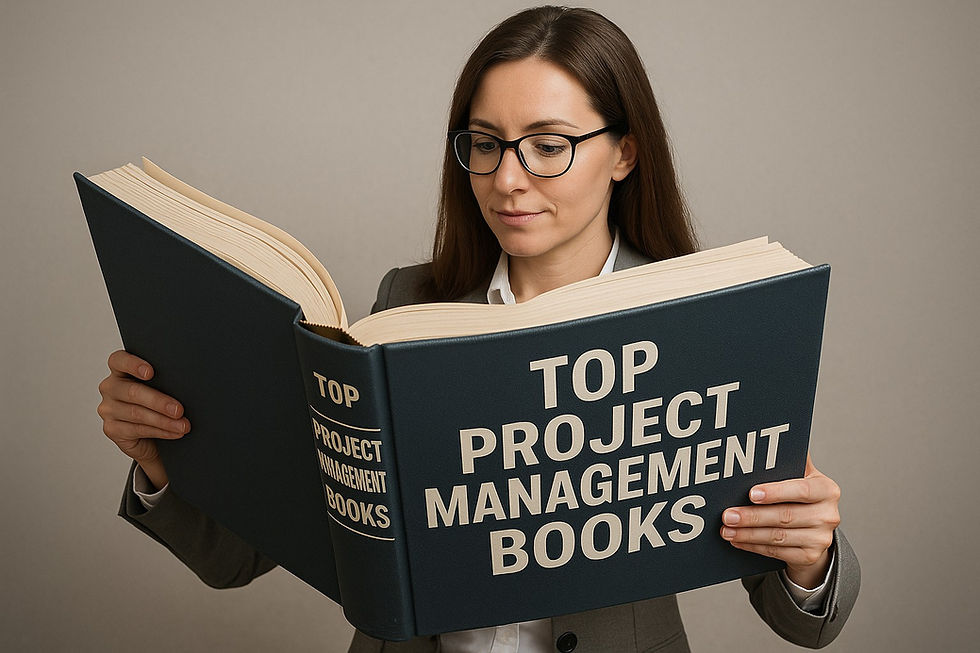
Why Project Management Books Matter in Corporate Development
In a high-performing organization, learning is never optional. Corporate leaders understand that continuous education is a strategic investment that sharpens judgment, builds resilience, and enables innovation.
Books play a special role in this process because they provide a structured way to understand methodologies, frameworks, and behavioral dynamics in depth. Unlike quick articles or social posts, a well-researched project management book provides a comprehensive view of concepts that have been tested and validated across industries.
For corporations, encouraging teams to study project management literature is part of workforce development. It enhances capability maturity, aligns teams on shared terminology, and reinforces governance principles that sustain long-term success.
The Corporate Value of Continuous Learning
Corporate project management thrives on discipline and adaptability. Reading promotes both. The insights gained from books are not only academic they help leaders make better decisions in risk management, stakeholder engagement, and process optimization.
Key Corporate Benefits of Encouraging Reading
Governance Alignment: Books reinforce standard frameworks like PMBOK, PRINCE2, and Agile governance models.
Leadership Development: Encourages strategic thinking, empathy, and problem-solving.
PMO Capability Growth: Builds consistency in planning, scheduling, and portfolio reporting.
Innovation Enablement: Inspires new ways to approach project delivery challenges.
Cultural Integration: Promotes a unified understanding of corporate project management values.
Reading is not simply professional development it’s a performance multiplier for enterprise project management teams.
How to Choose the Right Project Management Books for Corporate Teams
Selecting the right resources depends on your organization’s maturity level and goals. Whether your PMO is in its early stages or managing complex global programs, the right book can provide clarity and focus.
Corporate Selection Criteria
Alignment with Organizational Frameworks: Ensure the content aligns with methodologies such as Agile, Waterfall, or hybrid models used within your PMO.
Practical Application: Books that include templates, checklists, and case studies make implementation easier.
Leadership Focus: Prioritize titles that cover team management, communication, and stakeholder engagement.
Relevance to Current Trends: Look for insights on digital transformation, data-driven governance, and AI-enhanced project management.
When used strategically, reading lists become part of the corporate learning ecosystem that supports leadership succession and project governance excellence.
Top Project Management Books for Corporate Professionals
Below is a curated selection of influential books that every corporate project manager, PMO director, and executive sponsor should consider reading. These works are known for shaping leadership styles, improving communication, and strengthening governance capabilities.
1. “Project Management: A Systems Approach to Planning, Scheduling, and Controlling” – Harold Kerzner
This classic is often regarded as the corporate project management bible. It covers advanced methodologies, lifecycle management, and portfolio-level governance, making it ideal for executives overseeing multiple projects.
Kerzner’s book emphasizes structured planning, risk management, and executive reporting all essential for PMO leaders. It provides both theoretical frameworks and practical techniques for large, complex organizations.
2. “The Fast Forward MBA in Project Management” – Eric Verzuh
This book simplifies complex concepts into accessible lessons for both beginners and experienced professionals. It bridges theory and practice, covering tools such as critical path analysis, earned value management, and stakeholder communication.
For corporate readers, Verzuh’s structured approach mirrors enterprise best practices, helping teams improve collaboration and accountability.
3. “Making Things Happen: Mastering Project Management” – Scott Berkun
Berkun’s book focuses on leadership, influence, and human behavior key factors in corporate project success. It goes beyond schedules and budgets to explore how project managers can inspire teams, resolve conflict, and communicate with executives effectively.
This book is a favorite among technology-driven organizations and digital PMOs looking to balance process with creativity.
4. “Agile Project Management with Scrum” – Ken Schwaber
Agile frameworks are widely adopted across industries. Schwaber’s book provides a clear, practical guide to implementing Scrum principles at scale.
Corporate readers will find this resource especially useful for transforming traditional governance structures into adaptive, iterative delivery models that respond faster to business needs.
5. “The Lean Startup” – Eric Ries
While not exclusively a project management book, “The Lean Startup” has profoundly influenced corporate innovation practices. It teaches how to test ideas rapidly, reduce waste, and adapt through continuous feedback.
Enterprise PMOs can apply its principles to internal process improvement and product development governance.
6. “Leading Successful PMOs” – Peter Taylor
This book is a must-read for corporate project management leaders. Taylor explains how to build and sustain a high-performing PMO, balancing governance with agility.
For executives managing portfolios across multiple business units, this book provides insight into PMO maturity models, strategic alignment, and stakeholder engagement.
7. “Drive: The Surprising Truth About What Motivates Us” – Daniel H. Pink
Motivation and leadership are central to successful corporate delivery. Pink’s work explores what drives individuals and teams beyond financial incentives.
For project leaders, understanding intrinsic motivation can transform how teams engage, innovate, and commit to project outcomes.
8. “Measure What Matters” – John Doerr
This book introduces the Objectives and Key Results (OKR) framework, a powerful method for aligning project and corporate goals.
PMO leaders use OKRs to track measurable outcomes and link project execution to enterprise strategy. It is a valuable resource for companies that emphasize data-driven decision-making.
9. “The Art of Project Management” – Scott Berkun
Berkun’s earlier work remains a classic. It covers the interpersonal and political challenges of leading projects within complex organizations.
Corporate readers will benefit from its insights into negotiation, stakeholder influence, and decision-making all critical for enterprise-level project success.
10. “The Phoenix Project” – Gene Kim, Kevin Behr, and George Spafford
Presented as a novel, this book illustrates how project management, IT operations, and leadership intersect. It has become essential reading for organizations undergoing digital transformation.
Executives and PMOs can apply its lessons to improve collaboration between business and technology functions while reducing operational friction.
How Corporations Can Use Books for PMO Capability Building
Reading is powerful, but it becomes transformative when embedded into corporate development programs. Many organizations now include curated reading lists as part of their leadership and PMO maturity frameworks.
Integration Methods Include:
PMO Reading Circles: Teams discuss key insights and apply them to active projects.
Learning Portals: Internal knowledge platforms featuring book summaries and best practices.
Certification Preparation: Using recommended books for PMP, PRINCE2, or Agile certifications.
Executive Learning Series: Senior leaders share reflections on books that shaped their approach.
These practices transform reading from a personal habit into a collective competency that strengthens organizational culture.
The Link Between Reading and Governance Maturity
Governance maturity depends on shared understanding, consistent methodology, and strong leadership. Books help establish these elements across geographically distributed teams.
By integrating reading programs into the PMO framework, corporations enhance
decision-making, promote consistency, and align delivery methods with enterprise objectives.
Books also provide case studies that mirror real-world challenges, allowing managers to analyze decisions before they occur in practice.
Emerging Topics in Corporate Project Management Literature
As organizations evolve, so does the literature that supports them. Modern project management books explore themes such as digital transformation, AI integration, sustainability, and hybrid delivery.
Popular Emerging Topics Include:
AI-Driven Project Forecasting: Using predictive analytics for risk and cost management.
Sustainable Project Delivery: Incorporating environmental and social responsibility.
Cross-Cultural Leadership: Managing virtual and global teams effectively.
Hybrid Governance Models: Combining Agile flexibility with Waterfall control.
Executives who keep pace with these topics position their organizations to adapt quickly to future challenges.
Corporate Implementation: Creating a PMO Library
A corporate PMO library ensures continuous learning remains accessible to all project professionals.
Best Practices for Establishing a PMO Library
Curate both foundational and advanced titles.
Provide digital and physical access to resources.
Include books aligned with corporate methodologies.
Track reading engagement and link it to performance metrics.
Update the library annually to reflect new trends.
When employees see learning as part of daily work rather than an extra task, organizational capability grows naturally.
Leadership Insights from Project Management Books
While methodologies provide structure, leadership drives results. Many project management books highlight the importance of communication, empathy, and influence.
Key Leadership Lessons from Corporate PM Literature
Strong leaders create psychological safety that encourages innovation.
Transparent communication prevents risk escalation.
Emotional intelligence enhances collaboration across hierarchies.
Strategic thinking ensures alignment between operations and corporate goals.
Corporate leaders who apply these lessons elevate both team performance and organizational trust.
Conclusion
The most successful corporations understand that project management is not static it evolves with people, processes, and technology. Books remain one of the most powerful tools for keeping pace with that evolution.
By curating the right reading list, fostering a learning culture, and integrating insights into governance frameworks, enterprises can strengthen their PMOs and build resilient leadership pipelines.
The next time your project team faces a complex challenge, remember: sometimes, the best solution starts with the right book.
Professional Project Manager Templates are available here
Key Learning Resources can be found here:
Hashtags
#TopProjectManagementBooks #CorporatePMO #LeadershipDevelopment #PMOFramework #ProjectGovernance #ProjectLeadership #BusinessStrategy


