
Top Risk Management Frameworks for Project Management Success

Risk management is more crucial than ever in today's fast-paced corporate environment. Organizations face various challenges, from market fluctuations to technological advancements, making it essential to have a robust risk management framework in place. These frameworks provide a structured approach to identifying, assessing, and mitigating risks, ensuring that projects remain stable and successful. In this article, we will explore the top ten risk management frameworks that can help strengthen project stability, enhancing overall organizational resilience and performance.
Understanding the Importance of Risk Management Frameworks
In the realm of project management, risk is an inherent factor. Every project carries uncertainties that could derail timelines, inflate budgets, or even compromise objectives. Risk management frameworks offer a systematic way to address these uncertainties, allowing organizations to preemptively identify potential issues and implement strategies to mitigate them. This proactive approach is essential for project stability and organizational success, providing a solid foundation upon which to build and execute projects.
Furthermore, a clear risk management framework can enhance communication and collaboration among team members. By defining risk processes and responsibilities, everyone involved can understand their role in managing risk, leading to increased accountability. This not only fosters a culture of transparency but also empowers teams to respond effectively to challenges, ultimately contributing to project success. Organizations that prioritize risk management frameworks often see improved decision-making processes, real-time response capabilities, and greater overall project resilience.
Additionally, adopting a risk management framework can significantly improve stakeholder confidence. When stakeholders, such as clients, investors, or board members, see that a company has a well-defined risk management approach, they are more likely to trust the organization's ability to deliver on its promises. This trust can translate into stronger partnerships, increased investment, and a more favorable reputation in the industry, ultimately driving long-term growth and success.
Key Elements of Effective Risk Management Strategies
An effective risk management strategy consists of several crucial elements that work together to create a comprehensive approach to risk. First and foremost is risk identification, which involves recognizing potential risks that could impact a project. This can be achieved through brainstorming sessions, historical data analysis, and stakeholder interviews. Identifying risks early allows organizations to develop plans to mitigate them before they escalate into significant issues.
Next, risk assessment plays a pivotal role in understanding the potential impact of identified risks. This involves evaluating both the likelihood of a risk occurring and the potential consequences should it materialize. Techniques such as qualitative and quantitative analysis can help project teams prioritize risks based on their significance. By categorizing risks according to their severity, organizations can allocate resources effectively and focus on the most critical areas.
Lastly, effective risk management strategies incorporate continuous monitoring and review processes. Risk management is not a one-time activity; it requires ongoing assessment and adjustment as projects evolve. By establishing metrics for success and regularly reviewing risk management plans, organizations can adapt to changing circumstances and ensure that risk management remains responsive and effective. This cyclical approach reinforces the importance of being agile and allows for real-time adjustments that can significantly enhance project outcomes.
Overview of the Top 10 Risk Management Frameworks
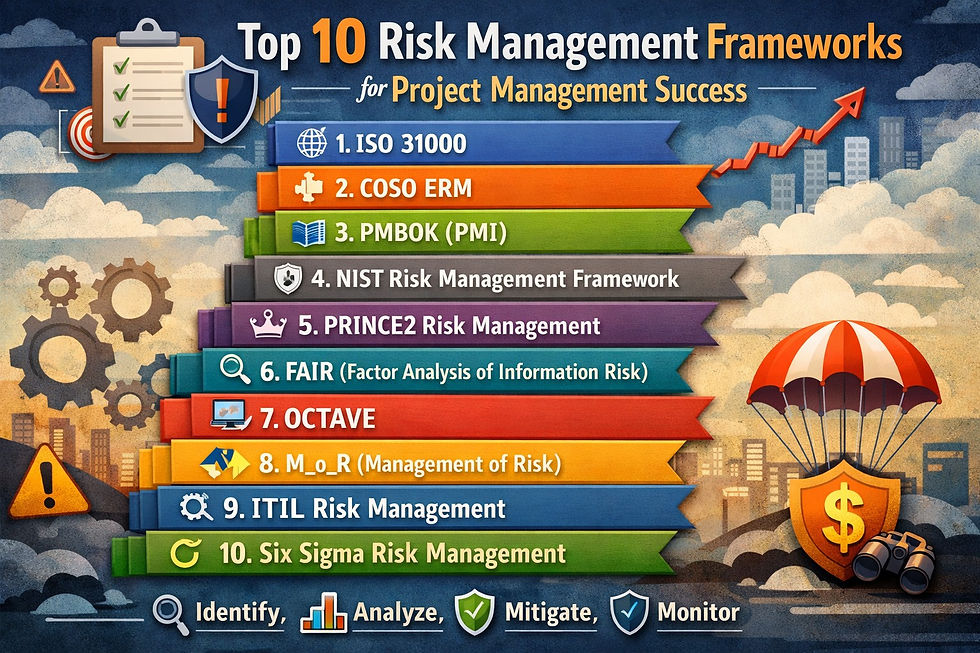
The selection of a suitable risk management framework can significantly enhance an organization’s approach to risk. Various frameworks cater to different needs, industries, and organizational structures, yet they all share a common goal to stabilize projects and drive success. In this section, we will explore ten of the most influential risk management frameworks that can be integrated into corporate strategies.
Each of these frameworks offers unique methodologies, tools, and best practices designed to address risks effectively. From established standards to innovative approaches, these frameworks provide guidance on how to identify, assess, and mitigate risks in a structured manner. Adopting one or multiple frameworks can empower organizations to tailor their risk management to their specific operational context, ensuring a better alignment with corporate objectives.
Beyond merely listing the frameworks, we will delve into their applications and benefits, highlighting how each one can contribute to enhancing project stability, improving stakeholder confidence, and ultimately driving organizational success. Understanding these frameworks allows organizations to make informed decisions about which approach best suits their needs, paving the way for enhanced risk management capabilities.
Framework: The PMBOK Guide and Its Applications
The Project Management Body of Knowledge (PMBOK) Guide serves as a cornerstone for project management practices globally. Published by the Project Management Institute (PMI), this guide outlines best practices, standard terminologies, and guidelines that project managers should follow. One of the key aspects of the PMBOK Guide is its dedicated section on risk management, which details processes for identifying, analyzing, and responding to risks throughout the project lifecycle.
The PMBOK framework encompasses several processes, including risk management planning, risk identification, qualitative and quantitative risk analysis, risk response planning, and risk monitoring and control. By following these processes, organizations can create a comprehensive risk management plan tailored to their specific project requirements. This structured approach not only helps in identifying potential risks but also ensures that risk responses are strategic and aligned with the project goals.
Organizations that implement the PMBOK framework benefit from improved project outcomes, as it encourages a proactive stance on risk management. By placing an emphasis on thorough planning and continuous monitoring, project teams are better equipped to navigate uncertainties and adjust their strategies in real-time. As a result, the PMBOK Guide remains a widely respected resource for organizations seeking to bolster their risk management practices.
Framework: ISO 31000 for Comprehensive Risk Management
ISO 31000 is an international standard that offers guidelines on risk management applicable to any organization, regardless of size or industry. It provides a comprehensive framework for risk management principles and guidelines, ensuring that risk management is integrated into all aspects of organizational governance and decision-making. One of its core strengths is that it emphasizes the importance of a holistic approach, encouraging organizations to embed risk management into their culture.
At its core, ISO 31000 outlines a systematic process for risk management that includes risk identification, risk assessment, risk treatment, and continuous monitoring and review. This cyclical approach allows organizations to remain agile and responsive to changing environments, which is critical for maintaining project stability. Moreover, it promotes stakeholder communication and engagement, ensuring that all relevant parties are aware of and involved in the risk management processes.
By adopting ISO 31000, organizations can foster a culture of risk awareness and proactive management. This framework helps organizations make informed decisions, allocate resources efficiently, and enhance their overall resilience in the face of uncertainties. Ultimately, ISO 31000 not only strengthens individual project stability but also contributes to long-term organizational success by embedding risk management into the very fabric of the enterprise.
Framework: COSO ERM Model for Strategic Alignment
The Committee of Sponsoring Organizations of the Treadway Commission (COSO) developed the Enterprise Risk Management (ERM) Framework, which focuses on aligning risk management with organizational strategy. The COSO ERM model emphasizes the importance of integrating risk management into the organization's overall governance framework, ensuring that risk considerations are a fundamental part of strategic planning and decision-making processes.
The COSO ERM model consists of several components, including governance, strategy, performance, review, and communication. This comprehensive approach ensures that risk management is not viewed as a standalone process but rather as an integral part of achieving organizational objectives. By aligning risk management with strategic goals, organizations can make informed decisions that minimize potential threats while maximizing opportunities for growth.
Implementing the COSO ERM model can lead to improved performance and enhanced stakeholder confidence. By integrating risk management into the strategic planning process, organizations can better navigate uncertainties and capitalize on emerging opportunities. This alignment not only strengthens project stability but also fosters a culture of proactive risk management that can drive long-term success across the organization.
Framework: The Agile Risk Management Approach
The Agile Risk Management Approach is particularly relevant in today’s rapidly changing environment, where flexibility and adaptability are essential for project success. This framework emphasizes the need for continuous assessment and rapid response to risks, aligning closely with Agile project management principles. Instead of a linear, sequential process, the Agile approach allows for iterative cycles of planning, executing, and reviewing, which is particularly beneficial in dynamic project environments.
In practice, the Agile Risk Management Approach involves regular team meetings, such as daily stand-ups or sprint retrospectives, where team members can identify and discuss risks in real-time. This collaborative environment fosters open communication and encourages team members to voice concerns, leading to timely identification of potential issues. As risks are continually assessed, the team can adjust plans and priorities based on the latest information, ensuring that risk management remains responsive to changing circumstances.
One of the key advantages of the Agile Risk Management Approach is its focus on customer collaboration and feedback. By incorporating stakeholder input into the risk management process, organizations can better align their projects with client expectations and needs. This alignment not only enhances project stability but also improves overall satisfaction, making the Agile approach a powerful tool for organizations striving to navigate uncertainties effectively.
Framework: The Risk Management Maturity Model Explained
The Risk Management Maturity Model (RMMM) is a framework designed to assess and improve an organization’s risk management capabilities. It provides a structured pathway for organizations to evaluate their current risk management practices and develop strategies for enhancement. The model typically consists of several maturity levels, ranging from initial ad-hoc processes to fully integrated risk management practices that are embedded within the organization’s culture.
At the initial stages of the RMMM, organizations often struggle with inconsistent risk management practices and lack a formalized approach to risk. As they progress through the maturity levels, they begin to implement more structured processes, conduct regular risk assessments, and develop risk mitigation strategies. Eventually, mature organizations achieve a level of risk management that is not only consistent and proactive but also aligned with their strategic objectives.
One of the key benefits of the Risk Management Maturity Model is that it allows organizations to benchmark their risk management practices against industry standards. This benchmarking provides valuable insights into areas for improvement and helps organizations prioritize their risk management initiatives. By following the RMMM framework, organizations can enhance their risk management capabilities, leading to improved project stability and overall organizational performance.
Frequently Asked Questions About Risk Management Frameworks in Project Management
What is a risk management framework in project management?
A risk management framework in project management is a structured methodology that defines how risks are identified, assessed, prioritized, mitigated, and monitored throughout the project lifecycle. In enterprise environments, this framework is not a standalone process but an integrated component of governance, delivery, and strategic planning. It provides consistency across projects, ensuring that risk practices are repeatable, measurable, and aligned with organizational objectives.
Rather than relying on reactive problem-solving, a framework introduces discipline into how uncertainty is managed. It establishes standard processes, tools, and roles, enabling project teams to operate within clearly defined boundaries. This reduces ambiguity and improves decision-making speed, particularly in complex environments where multiple risks interact across functions and systems.
For large organizations, a risk management framework also serves as a control mechanism. It aligns project-level risks with enterprise risk appetite, ensuring that individual initiatives do not expose the organization to unacceptable levels of financial, operational, or reputational risk.
Why are risk management frameworks critical for project stability?
Risk management frameworks are essential because they shift organizations from reactive to proactive risk handling. Without a structured framework, risks are often identified too late, when mitigation options are limited and costly. This leads to project delays, budget overruns, and compromised outcomes.
In contrast, a well-implemented framework enables early risk detection, allowing teams to act before issues escalate. This early intervention capability is a key driver of project stability. It ensures that risks are continuously monitored and managed rather than addressed only when they become critical problems.
Additionally, frameworks provide clarity around roles and responsibilities. When everyone understands who owns each risk and how it should be managed, accountability improves significantly. This reduces the likelihood of risks being overlooked or mismanaged, which is a common failure point in large-scale projects.
How do risk management frameworks support enterprise decision-making?
In enterprise environments, decision-making is heavily dependent on accurate, timely, and structured information. Risk management frameworks provide this by standardizing how risk data is captured, analyzed, and reported.
Executives and stakeholders rely on risk insights to make informed decisions about funding, prioritization, and resource allocation. A robust framework ensures that these insights are consistent and comparable across projects, enabling better portfolio-level decisions.
Moreover, frameworks support scenario analysis and forecasting. By understanding potential risks and their impact, organizations can evaluate different strategic options and choose the most viable path forward. This capability is particularly valuable in industries where uncertainty is high and decisions carry significant financial implications.
What are the key components of an effective risk management framework?
An effective risk management framework typically includes several core components that work together to create a comprehensive approach to risk management. These include risk identification, risk assessment, risk response planning, risk monitoring, and governance integration.
Risk identification involves systematically uncovering potential threats and opportunities that could impact the project. This is followed by risk assessment, where risks are evaluated based on their likelihood and impact. These two steps form the foundation of the framework.
Risk response planning defines how each identified risk will be addressed. This may include mitigation, avoidance, transfer, or acceptance strategies. Monitoring ensures that risks are tracked over time, and that response strategies remain effective as the project evolves.
Finally, governance integration ensures that risk management is embedded within organizational structures and processes. This includes alignment with corporate policies, reporting requirements, and decision-making frameworks.
How do organizations choose the right risk management framework?
Selecting the right risk management framework depends on several factors, including organizational size, industry requirements, regulatory obligations, and project complexity. There is no one-size-fits-all solution, particularly in enterprise environments where risk profiles can vary significantly across business units.
Organizations typically evaluate frameworks based on scalability, flexibility, and alignment with existing governance structures. For example, highly regulated industries may prioritize frameworks that emphasize compliance and auditability, while technology-driven organizations may focus on agility and rapid risk response.
Another critical consideration is integration capability. The chosen framework must align with project management methodologies, whether agile, waterfall, or hybrid. Seamless integration ensures that risk management does not become a separate administrative burden but remains embedded within day-to-day project activities.
What role do project managers play in implementing risk management frameworks?
Project managers are central to the successful implementation of risk management frameworks. While frameworks provide structure, it is the project manager who operationalizes them within the project environment.
Their responsibilities include facilitating risk identification sessions, ensuring accurate risk documentation, and coordinating response strategies. They also act as the primary point of communication between stakeholders, ensuring that risk information is shared transparently and acted upon promptly.
In enterprise settings, project managers must also align project-level risks with broader organizational priorities. This requires an understanding of both operational and strategic contexts. Effective project managers go beyond process execution, they actively influence risk culture within their teams, encouraging proactive identification and ownership of risks.
How do risk management frameworks improve stakeholder confidence?
Stakeholder confidence is directly linked to an organization’s ability to manage uncertainty effectively. A well-defined risk management framework demonstrates that the organization has a structured approach to identifying and addressing potential challenges.
This transparency reassures stakeholders that risks are being actively managed rather than ignored. Regular risk reporting, supported by a robust framework, provides stakeholders with visibility into project health and potential issues. This reduces surprises and builds trust over time.
In large organizations, where projects often involve significant investment, this confidence is critical. Stakeholders are more likely to support initiatives when they believe that risks are understood and controlled. This can lead to stronger partnerships, increased funding opportunities, and improved overall project outcomes.
What are common challenges when implementing risk management frameworks?
Despite their benefits, implementing risk management frameworks can present several challenges, particularly in large organizations. One common issue is resistance to change. Teams accustomed to informal risk management practices may view structured frameworks as overly bureaucratic.
Another challenge is inconsistent adoption. Without strong governance and leadership support, different teams may apply the framework inconsistently, reducing its effectiveness. This can lead to fragmented risk management practices and gaps in oversight.
Data quality is also a critical concern. Inaccurate or incomplete risk data undermines the reliability of risk assessments and decision-making processes. Organizations must invest in training and tools to ensure that risk information is captured accurately and consistently.
How can organizations embed risk management into project culture?
Embedding risk management into project culture requires more than implementing processes, it involves changing behaviors and mindsets. Organizations must promote a culture where risk identification and discussion are encouraged rather than avoided.
Leadership plays a crucial role in this transformation. When senior leaders prioritize risk management and actively engage in risk discussions, it sets the tone for the rest of the organization. This top-down approach helps normalize risk management as a core component of project delivery.
Training and continuous learning are also essential. Teams need to understand not only how to use the framework but also why it matters. Providing practical examples and real-world scenarios can help reinforce the value of proactive risk management.
How do risk management frameworks evolve over time?
Risk management frameworks are not static, they must evolve to remain effective in changing environments. As organizations grow and external conditions shift, new risks emerge that require updated approaches and tools.
Continuous improvement is a key principle in maintaining an effective framework. Organizations should regularly review their risk management practices, incorporating lessons learned from past projects. This ensures that the framework remains relevant and aligned with current challenges.
Technological advancements also play a role in this evolution. Modern risk management tools enable real-time data analysis, predictive insights, and automated reporting. Integrating these capabilities into existing frameworks enhances their effectiveness and supports more agile decision-making.
Ultimately, organizations that treat risk management as a dynamic capability rather than a static process are better positioned to navigate uncertainty. By continuously refining their frameworks, they can strengthen project stability, improve resilience, and maintain a competitive edge in an increasingly complex business landscape.
Conclusion
Risk management frameworks are essential for organizations seeking to strengthen project stability in an ever-changing business landscape. By understanding the importance of these frameworks and their key elements, decision-makers can select the most suitable approach for their specific contexts. From the PMBOK Guide to ISO 31000 and beyond, each framework offers unique benefits that can help organizations navigate risks effectively, ensuring long-term success. The adoption of these frameworks fosters a culture of proactive risk management, ultimately contributing to improved project outcomes and organizational resilience. Explore risk management frameworks at the APM
Discover More great insights at
Hashtags: #RiskManagement #ProjectStability #ISO31000 #Agile #COSOERM


