
Project Management in Digital Marketing: Integrating Technology with Strategy

Updated: Apr 27
In today’s corporate world, marketing is no longer an isolated creative function it’s a complex ecosystem of data, technology, content, analytics, and customer experience. Managing this ecosystem efficiently requires a structured, disciplined approach, supported by solutions like Multilogin cloud phone that help teams maintain organized, scalable digital operations across multiple environments. That’s where Project Management in Digital Marketing comes in.
Digital marketing projects involve multiple moving parts: campaign design, social media coordination, data reporting, paid media strategy, creative production, and technology integration. Without robust project management, deadlines slip, costs overrun, and messaging loses consistency.
In a corporate context, project management transforms digital marketing from a reactive effort into a strategic, measurable, and high-performing business function. It ensures that campaigns align with brand objectives, adhere to governance standards, and deliver tangible results across global markets.
This comprehensive guide explores how project management principles can be applied to digital marketing operations, driving greater efficiency, collaboration, and accountability across large enterprises.
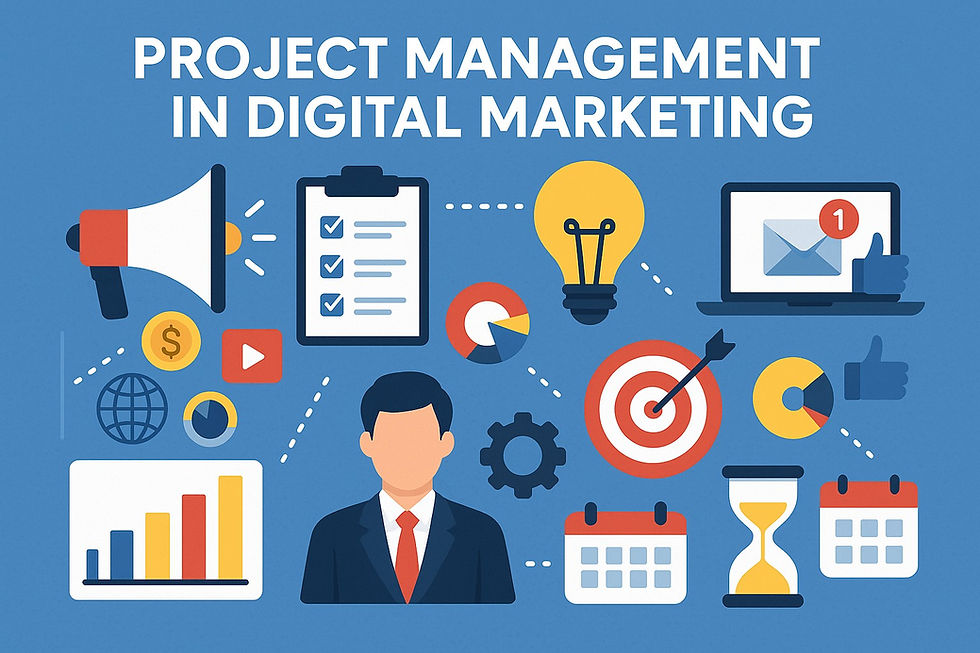
Understanding Project Management in Digital Marketing
Digital marketing project management refers to the process of planning, executing, and monitoring marketing initiatives to achieve specific business goals. It combines creative collaboration with analytical oversight.
At its core, digital marketing project management answers critical questions:
What is the campaign objective?
Who owns each deliverable?
What is the timeline and budget?
How do we measure success?
How do we maintain consistency across markets and platforms?
By integrating project management methodologies such as Agile, Scrum, or Waterfall, organizations can bring predictability to a dynamic and fast-paced marketing landscape.
Why Corporations Need Structured Marketing Project Management
Corporate marketing departments handle numerous campaigns simultaneously product launches, brand refreshes, digital transformations, and omnichannel customer journeys. Each involves multiple stakeholders, from creative teams and media buyers to analytics experts and legal reviewers.
Without structure, these activities become fragmented. Deliverables overlap, timelines clash, and budgets escalate.
Project management provides a corporate framework for:
Standardizing workflows and approval processes.
Enhancing visibility across campaigns.
Coordinating global teams.
Measuring campaign ROI and performance.
Aligning marketing outputs with strategic business objectives.
For large organizations, marketing project management is not optional it’s a necessity for efficiency, governance, and profitability.
Governance and the Marketing PMO
Corporate project management often operates through a Project Management Office (PMO). In a marketing context, a Marketing PMO provides structure, oversight, and accountability.
Functions of a Marketing PMO Include:
Portfolio Oversight: Managing campaigns, product launches, and creative initiatives under a unified strategy.
Governance Frameworks: Establishing standards for approvals, data use, and compliance.
Performance Tracking: Consolidating KPIs such as cost per lead, engagement rate, and conversion metrics.
Budget Management: Monitoring expenditure across campaigns.
Resource Allocation: Ensuring teams are not overextended and deadlines are achievable.
By centralizing marketing project governance, corporations gain control over execution, ensure brand consistency, and improve strategic alignment across business units.
The Digital Marketing Project Lifecycle
Just like traditional projects, digital marketing initiatives progress through a structured lifecycle. Each phase contributes to strategic delivery and operational control.
1. Initiation
Every marketing project begins with defining the objective. Is the campaign meant to increase sales, enhance brand awareness, or drive engagement? The initiation phase involves stakeholder identification, high-level scope, and business case validation.
2. Planning
This stage includes setting timelines, budgets, KPIs, and risk assessments. Tools like Asana, Monday.com, or Jira help teams organize tasks and dependencies. Creative briefs, content calendars, and asset approval workflows are also developed.
3. Execution
The execution phase involves launching campaigns, coordinating deliverables, and monitoring performance. Project managers facilitate collaboration between creative, digital, and analytics teams to ensure milestones are met.
4. Monitoring and Optimization
Project managers track performance metrics against KPIs. If campaign results deviate from targets, corrective actions are taken adjusting ad spend, optimizing content, or refining audience targeting.
5. Closure and Review
After campaign completion, the project team analyzes outcomes, documents lessons learned, and reports ROI to executives. This ensures continuous improvement and knowledge retention.
Methodologies for Managing Digital Marketing Projects
Different organizations adopt different methodologies depending on their operational style and project complexity.
1. Agile Marketing
Agile emphasizes adaptability, collaboration, and iterative delivery. In digital marketing, this means continuous testing, feedback, and optimization. Campaigns are broken into short cycles called sprints.
Agile marketing benefits include faster turnaround times, better team communication, and improved responsiveness to market trends.
2. Waterfall Approach
This traditional method follows a linear path each phase is completed before the next begins. It’s ideal for campaigns with fixed budgets and regulatory dependencies, such as pharmaceutical or financial marketing.
3. Hybrid Approach
Many corporations use a hybrid model combining Agile creativity with Waterfall discipline. Planning remains structured, while execution allows for flexibility.
Tools That Power Digital Marketing Project Management
Digital marketing thrives on technology. Project management tools enable coordination, scheduling, reporting, and real-time collaboration across global teams.
Common Corporate Tools Include:
Asana / Trello / Monday.com: For task tracking and agile boards.
Wrike / Smartsheet: For enterprise campaign planning and approvals.
Microsoft Teams / Slack: For cross-department communication.
HubSpot / Salesforce Marketing Cloud: For CRM integration and campaign analytics.
Google Analytics / Power BI: For performance dashboards and ROI measurement.
Integrating these tools within a unified PMO ecosystem ensures marketing activities remain transparent, measurable, and efficient.
Roles and Responsibilities in Marketing Project Management
Project management in digital marketing requires collaboration between creative and analytical minds. The following roles are typically involved in corporate marketing projects:
1. Marketing Project Manager
Oversees planning, execution, and performance reporting. Acts as a bridge between marketing strategy and operations.
2. Campaign Manager
Focuses on tactical delivery configuring ads, targeting audiences, and monitoring metrics.
3. Creative Lead
Ensures brand messaging aligns with visual identity and campaign goals.
4. Data Analyst
Monitors KPIs and generates actionable insights.
5. Stakeholders and Executives
Approve budgets, validate ROI, and align marketing outcomes with strategic objectives.
Collaboration among these roles ensures efficiency, governance, and accountability across marketing operations.
Corporate Governance and Risk Management in Marketing Projects
Large enterprises must comply with legal, financial, and data privacy regulations. Marketing project management plays a vital role in enforcing compliance while maintaining operational agility.
Key Governance Elements Include:
Data Protection: Ensuring compliance with GDPR, CCPA, and other regional regulations.
Brand Consistency: Enforcing approval workflows to prevent off-brand messaging.
Budget Controls: Setting financial thresholds and approval checkpoints.
Risk Tracking: Identifying potential delays, compliance breaches, or media missteps.
By maintaining governance discipline, corporations safeguard brand reputation while enabling marketing innovation.
Budgeting and Financial Performance
Effective budgeting ensures that marketing projects deliver strong ROI while staying within corporate constraints.
Project managers collaborate with finance teams to establish budget forecasts, allocate funds across campaigns, and monitor expenditure in real time. Performance dashboards track spend versus results, highlighting underperforming campaigns early.
Budget transparency enhances executive confidence and supports long-term portfolio planning.
Communication and Collaboration
Communication is at the heart of successful marketing project management. Corporate teams often span multiple regions, time zones, and departments, requiring seamless coordination.
Best Practices Include:
Conducting weekly status meetings.
Sharing visual dashboards with KPIs and updates.
Maintaining centralized repositories for creative assets.
Encouraging open communication through collaboration platforms.
Effective communication fosters alignment, prevents duplication, and keeps projects moving forward smoothly.
Performance Tracking and Analytics
Corporate marketing success depends on data. Project managers use KPIs to evaluate performance, efficiency, and impact.
Common Metrics Include:
Cost per Lead (CPL)
Return on Ad Spend (ROAS)
Conversion Rate
Customer Acquisition Cost (CAC)
Engagement Rate
Campaign Delivery Timeliness
These metrics help executives understand how marketing investments translate into measurable business outcomes.
Continuous Improvement and Optimization
Digital marketing evolves rapidly. Continuous improvement ensures corporate teams remain competitive and efficient.
Project managers document lessons learned, identify bottlenecks, and refine workflows for future projects. Insights from post-campaign reviews are shared across teams to encourage innovation and operational maturity.
Organizations that embrace continuous improvement gain agility and maintain a competitive advantage in dynamic markets.
Benefits of Project Management in Digital Marketing
Implementing structured project management delivers measurable corporate benefits, including:
Enhanced Efficiency: Reduced rework and improved time-to-market.
Greater Transparency: Real-time visibility into project and budget performance.
Improved Collaboration: Cross-departmental alignment.
Data-Driven Decision-Making: Better analytics and reporting.
Governance Compliance: Clear workflows that meet corporate policies.
Customer-Centric Focus: Aligning marketing activities with business outcomes.
When managed effectively, project management transforms marketing into a disciplined, results-driven corporate function.
The Future of Project Management in Digital Marketing
As technology evolves, project management in marketing will become even more data-centric and automated.
Emerging trends include:
AI-Powered Campaign Planning: Predictive analytics for customer behavior.
Automation Workflows: Streamlined task assignment and reporting.
Cross-Channel Integration: Unified management of social, email, and paid media.
Real-Time KPI Monitoring: Dashboards powered by machine learning.
Global PMO Governance: Standardized frameworks across regional marketing teams.
The future of marketing project management lies in smart automation, strong governance, and a commitment to continuous learning.
Conclusion
Project Management in Digital Marketing is more than scheduling campaigns it’s about aligning marketing operations with corporate strategy, governance, and performance.
By adopting structured methodologies, leveraging technology, and fostering cross-functional collaboration, organizations can transform their marketing functions into agile, data-driven engines of growth.
For corporate leaders, effective project management means predictable outcomes, optimized budgets, and measurable ROI. For marketing teams, it provides clarity, empowerment, and the ability to deliver impactful campaigns with confidence.
In a digital economy defined by speed and complexity, disciplined project management is the foundation of sustainable marketing success.
Professional Project Manager Templates are available here
Key Learning Resources can be found here:
Hashtags
#DigitalMarketing #ProjectManagement #MarketingPMO #CorporateMarketing #CampaignGovernance #MarketingAnalytics #PMOLeadership #OperationalExcellence #MarketingStrategy #DigitalTransformation #AgileMarketing #MarketingOperations #CorporateCommunications #MarketingROI #PortfolioManagement


