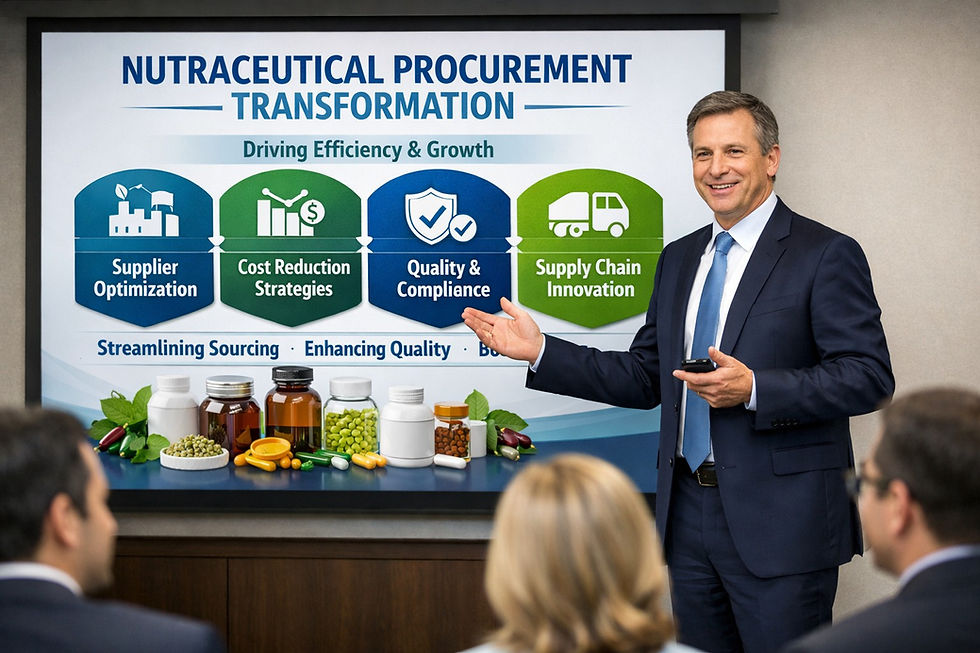
Life Sciences Procurement Transformation: Optimizing Costs and Supply Chain

In the life sciences sector, procurement has evolved far beyond a purely transactional function, becoming a central strategic capability that directly influences enterprise performance. For large pharmaceutical, biotech, and medtech organizations, procurement now serves as a lever for driving cost efficiency, enhancing supply chain resilience, ensuring regulatory compliance, and accelerating innovation pipelines.
The function plays a critical role in enabling organizations to respond swiftly to market shifts, manage complex supplier ecosystems, and support the rapid development and commercialization of new therapies. Transforming procurement in life sciences is therefore no longer optional; it is a business imperative.
Achieving this transformation requires the integration of advanced digital technologies, alignment of procurement operations with overarching corporate strategy, and the embedding of governance structures that simultaneously safeguard compliance and optimize financial outcomes.

The need for enterprise-scale procurement transformation is particularly acute in life sciences due to the industry’s stringent regulatory environment, complex and globalized supply chains, and the high financial and reputational stakes associated with sourcing decisions.
Large organizations routinely manage hundreds or even thousands of suppliers across multiple geographies, each with varying standards of quality, regulatory compliance, and operational reliability. From critical raw materials and laboratory reagents to highly specialized biologics and medical devices, any disruption in supply can have immediate and far-reaching consequences.
By adopting a transformation-focused approach, enterprises can shift from reactive, siloed, and manual procurement operations toward proactive, data-driven, and strategically aligned capabilities. This evolution enables life sciences organizations to optimize supplier relationships, anticipate and mitigate risks, standardize global processes, and deliver measurable impact on both operational performance and enterprise value.
Ultimately, procurement transformation becomes a strategic differentiator that strengthens the organization’s ability to innovate, scale, and maintain competitive advantage in a highly dynamic and regulated industry.
Why Procurement Transformation Matters in Life Sciences
The life sciences industry operates under intense regulatory scrutiny and complex global supply chains. Procurement decisions carry significant financial and reputational risks. For example, a delay in sourcing a key raw material can stall clinical trials or production lines, costing millions and impacting patient care.
Transforming procurement addresses these risks by:
Improving operational efficiency through standardized processes
Enhancing supplier management to build stronger partnerships
Increasing visibility into spend and supplier performance with digital procurement tools
Supporting regulatory compliance by embedding quality and audit controls
Enabling innovation by collaborating with suppliers on new technologies and materials
This transformation turns procurement into a strategic function that supports the entire enterprise supply chain and innovation pipeline.
Digital Tools Drive Procurement Transformation
Digital technologies are at the heart of procurement transformation in life sciences. Tools such as AI-powered spend analytics, e-procurement platforms, and supplier risk monitoring systems provide real-time insights and automation.
These technologies help organizations:
Standardize procurement processes across regions and business units
Gain visibility into total spend and supplier performance metrics
Predict supply chain disruptions before they affect production or clinical trials
Automate routine tasks, freeing procurement teams to focus on strategy
For example, a global pharmaceutical company used AI-driven analytics to identify redundant suppliers and consolidate contracts, saving millions annually while improving supplier quality.

Strategic Supplier Management Builds Resilience and Innovation
Life sciences procurement transformation requires shifting supplier relationships from transactional to strategic partnerships. Suppliers are no longer just vendors but collaborators in innovation and quality assurance.
Key practices include:
Engaging suppliers early in product development to co-create solutions
Establishing clear quality and compliance standards with regular audits
Sharing data and forecasts to improve supply chain planning
Developing contingency plans with suppliers to mitigate risks
For instance, a biotech firm partnered with a supplier to develop a new biologic formulation, accelerating time to market while ensuring compliance with regulatory standards.
Aligning Procurement with Corporate Strategy
Procurement transformation succeeds when it aligns closely with the enterprise’s broader goals. This means procurement teams must understand and support priorities such as cost reduction, risk management, and innovation enablement.
Steps to achieve alignment:
Define procurement objectives that support corporate strategy
Integrate procurement metrics into enterprise performance dashboards
Foster collaboration between procurement, R&D, quality, and finance teams
Train procurement staff on regulatory requirements and innovation trends
This alignment ensures procurement decisions contribute directly to business outcomes and compliance.
Embedding Governance for Compliance and Efficiency
Regulatory compliance is critical in life sciences procurement. Enterprises must embed governance structures that balance cost efficiency with strict adherence to quality and legal standards.
Effective governance includes:
Clear policies for supplier selection and evaluation
Documentation and audit trails for all procurement activities
Regular training on compliance requirements
Use of digital tools to monitor supplier risk and contract adherence
Such governance reduces the risk of non-compliance penalties and protects the enterprise’s reputation.
Procurement Best Practices for Life Sciences Enterprises
To maximize the benefits of procurement transformation, life sciences companies should adopt these best practices:
Use data-driven insights to guide sourcing decisions
Build long-term supplier partnerships focused on quality and innovation
Leverage digital procurement platforms for transparency and efficiency
Align procurement goals with enterprise strategy and compliance needs
Continuously monitor supplier performance and supply chain risks
By following these practices, organizations can reduce costs, improve supply chain resilience, and accelerate innovation.
Explore 'Driving value through life sciences procurement transformation' in this blog from C-Suite
FAQ Section
What is life sciences procurement transformation?
Life sciences procurement transformation is the strategic modernization of procurement functions in large pharmaceutical, biotech, and medtech enterprises. It focuses on optimizing costs, improving supplier collaboration, enhancing compliance, and embedding data-driven decision-making to support enterprise objectives.
Why is procurement transformation critical for life sciences enterprises?
The industry faces complex global supply chains, stringent regulatory oversight, high-value investments, and innovation-driven operations. Transformation ensures that procurement aligns with strategic goals, mitigates risk, reduces operational inefficiencies, and supports faster time-to-market for critical therapies.
Which digital technologies enable procurement transformation?
Enterprise-scale tools include AI-driven spend analytics, e-procurement platforms, supplier risk monitoring solutions, robotic process automation, and integration with ERP, finance, and quality management systems. These technologies improve visibility, decision-making, and operational efficiency.
How does transformation improve supplier relationships?
Modern procurement emphasizes strategic partnerships rather than transactional interactions. Enterprises collaborate with suppliers on R&D initiatives, supply chain optimization, regulatory compliance, and innovation, strengthening resilience and long-term value creation.
How is compliance maintained during procurement transformation?
Compliance is embedded through centralized documentation, automated alerts for regulatory or contractual deviations, audit-ready reporting, and governance frameworks that align with both corporate policies and global regulatory standards.
What measurable outcomes can enterprises expect?
Organizations typically see reduced procurement cycle times, cost savings, improved supplier performance, higher compliance scores, and stronger contributions to innovation pipelines. These outcomes support enterprise growth, resilience, and strategic agility.
Can procurement transformation support global operations?
Yes. Enterprise transformation frameworks are designed to scale across regions and business units, standardizing processes, centralizing oversight, and enabling consistent performance metrics while accommodating local regulatory and operational nuances.
How does procurement transformation enable innovation?
By treating suppliers as strategic partners and leveraging collaborative sourcing strategies, enterprises gain access to new technologies, materials, and co-development opportunities that accelerate product development and commercial readiness.
What role does workforce enablement play?
Transformation requires reskilling procurement teams to use advanced analytics, digital platforms, and strategic sourcing techniques. Leadership development and cross-functional collaboration are critical for sustaining enterprise-wide adoption and effectiveness.
How long does a procurement transformation take in large life sciences organizations?
Transformation timelines vary depending on scale, complexity, and maturity of existing procurement functions. Large enterprises typically implement transformation over 18–36 months, with phased adoption across regions, supplier segments, and functional areas.
Conclusion
Life sciences procurement transformation is a strategic imperative for large enterprises seeking to balance cost efficiency, innovation, and regulatory compliance. By integrating digital tools, optimizing processes, fostering supplier collaboration, and embedding governance, organizations can convert procurement from a transactional function into a value-creating capability.
Successful transformation enhances supply chain resilience, accelerates innovation, strengthens compliance, and drives measurable financial and operational outcomes. For enterprise leaders, procurement transformation is not merely operational improvement but a strategic lever for sustainable competitive advantage and long-term enterprise performance.
Hashtags
#ProcurementTransformation #LifeSciences #EnterpriseSupplyChain #StrategicSourcing #OperationalExcellence