
Lean Six Sigma Consultant: Tools and Techniques for Success

For organizations efficiency and quality are the foundation of long term success. Every company aims to deliver better products, slicker processes, and more value to its customers. However, maintaining high quality while reducing waste is easier said than done. This is where the expertise of a Lean Six Sigma Consultant becomes critical
A Lean Six Sigma Consultant helps business improve performance by eliminating inefficiencies, optimizing workflows, and ensuring continuous improvement. They combine two powerful methodologies Lean and Six Sigma to create sustainable change. Their goal is to enhance productivity, reduce variation, and improve customer satisfaction.
Whether in manufacturing, healthcare, IT, finance, or service industries, Lean Six Sigma Consultants bring structure and discipline to problem-solving. They guide teams in using data-driven methods to identify root causes and implement effective solutions.
In this detailed guide, we will explore what a Lean Six Sigma Consultant does, their skills, tools, career paths, and the impact they bring to organizations.
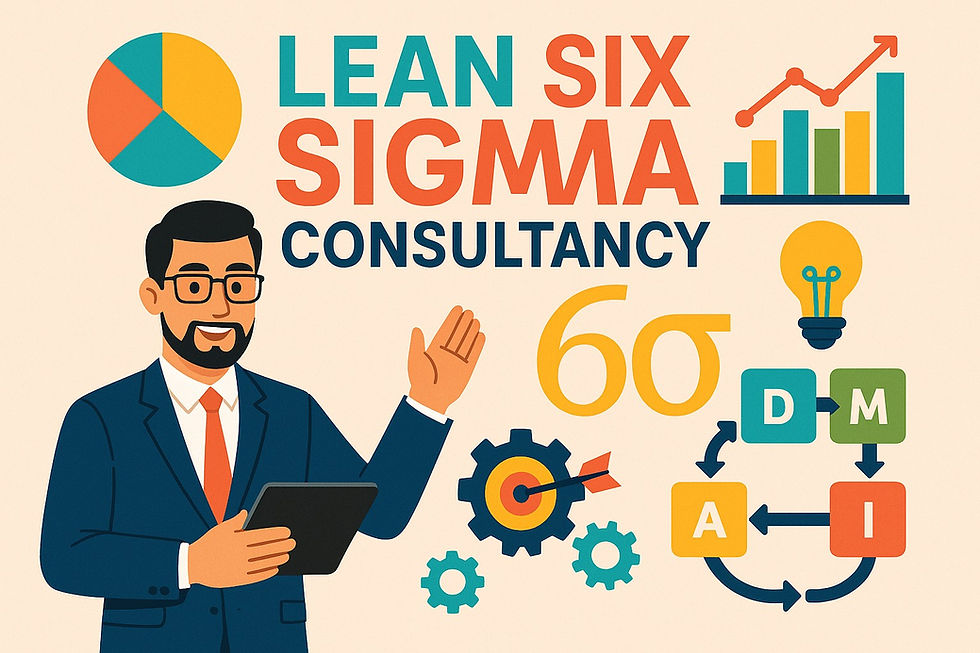
Understanding Lean Six Sigma
Before diving into the consultant’s role, it helps to understand what Lean Six Sigma actually means.
Lean is a methodology focused on eliminating waste and increasing value in processes. It aims to do more with less by identifying activities that do not add value and removing them.
Six Sigma, on the other hand, is a data-driven approach to improving quality by reducing variation and defects in processes. It uses statistical tools and structured problem-solving techniques to achieve near-perfect performance.
When combined, Lean Six Sigma becomes a powerful methodology that improves efficiency and quality simultaneously. The approach encourages a culture of continuous improvement, empowering teams to find smarter ways of working.
What Does a Lean Six Sigma Consultant Do?
A Lean Six Sigma Consultant is an expert who applies Lean Six Sigma principles to help businesses optimize operations and achieve measurable improvements. Their responsibilities include analyzing processes, identifying inefficiencies, training employees, and leading improvement projects.
Their role often bridges strategy and execution. They not only identify what needs improvement but also develop actionable plans and help implement them successfully.
Common Responsibilities Include:
Conducting process assessments to identify inefficiencies.
Designing and leading Lean Six Sigma projects.
Gathering and analyzing data to pinpoint root causes of problems.
Facilitating workshops and training sessions for employees.
Developing process maps and improvement plans.
Measuring project outcomes to ensure sustained benefits.
Supporting leadership in fostering a continuous improvement culture.
In essence, a Lean Six Sigma Consultant acts as both a coach and a change agent, guiding teams to achieve operational excellence.
The Core Principles Behind Lean Six Sigma
The work of a Lean Six Sigma Consultant is grounded in five core principles:
1. Focus on the Customer
Every improvement initiative must enhance value for the customer. Consultants ensure that all process changes align with customer needs and expectations.
2. Identify and Eliminate Waste
Lean identifies seven types of waste (overproduction, waiting, transport, extra processing, inventory, motion, and defects). The consultant’s role is to detect and eliminate them.
3. Reduce Variation
Six Sigma focuses on minimizing variation so that processes produce consistent, high-quality outcomes.
4. Empower People
Lean Six Sigma is not just a set of tools it is a mindset. Consultants empower employees to take ownership of their processes and continuously seek improvement.
5. Sustain Improvements
Sustainability ensures that changes are embedded in the organization’s culture. Consultants develop control plans and performance tracking systems to maintain gains over time.
Key Tools Used by Lean Six Sigma Consultants
Lean Six Sigma Consultants rely on a variety of tools to analyze and improve processes. These tools help visualize, quantify, and control problems systematically.
1. DMAIC Framework
This structured problem-solving method stands for Define, Measure, Analyze, Improve, Control. It is the backbone of Six Sigma projects and helps teams follow a disciplined approach.
2. Value Stream Mapping
This tool visualizes the entire process flow, showing where waste occurs and how value is created for the customer.
3. Pareto Charts
Pareto analysis helps prioritize problems by identifying the “vital few” causes that have the greatest impact.
4. Fishbone Diagram (Ishikawa)
Used for root cause analysis, this diagram helps identify all possible causes of a problem in categories such as people, process, equipment, and materials.
5. Control Charts
These statistical tools monitor process stability and performance over time.
6. 5S Methodology
A Lean tool for organizing the workplace Sort, Set in order, Shine, Standardize, and Sustain to enhance productivity and safety.
7. Failure Modes and Effects Analysis (FMEA)
This technique evaluates potential failure points in a process and prioritizes them by risk level.
8. Process Capability Analysis
Used to measure how well a process meets specifications.
These tools, combined with data-driven thinking, help consultants create structured improvements that deliver measurable results.
Industries That Benefit from Lean Six Sigma Consulting
Lean Six Sigma originated in manufacturing, but its benefits now extend across nearly every industry.
Manufacturing
Consultants streamline production, reduce defects, and improve resource efficiency.
Healthcare
They help hospitals enhance patient flow, reduce errors, and cut waiting times while improving care quality.
Finance and Banking
Lean Six Sigma helps optimize loan processing, billing, and compliance operations, improving accuracy and reducing delays.
Information Technology
Consultants enhance software development cycles, reduce rework, and improve service delivery.
Supply Chain and Logistics
They streamline inventory management, reduce transportation costs, and improve on-time delivery performance.
Government and Public Sector
Lean Six Sigma improves administrative efficiency, policy implementation, and citizen services.
Regardless of the industry, the goal remains the same: better quality, faster performance, and lower costs.
The Value a Lean Six Sigma Consultant Brings
Hiring a Lean Six Sigma Consultant offers measurable benefits to organizations:
1. Increased Efficiency
By eliminating waste and optimizing workflows, organizations achieve faster turnaround times and better resource utilization.
2. Cost Savings
Process improvement directly translates into financial savings by reducing rework, downtime, and unnecessary expenses.
3. Better Quality
Defect reduction and process standardization lead to higher-quality outputs.
4. Employee Engagement
Consultants empower employees to contribute ideas and participate in problem-solving, creating a culture of ownership.
5. Data-Driven Decision Making
Analytics-based decision-making ensures that improvements are based on facts, not assumptions.
6. Customer Satisfaction
When processes are efficient and consistent, customer experiences improve significantly.
7. Competitive Advantage
Continuous improvement helps companies adapt faster, innovate more effectively, and stay ahead of competitors.
Skills of a Successful Lean Six Sigma Consultant
To excel, consultants must blend technical expertise with soft skills.
Technical Skills Include:
Process mapping and statistical analysis.
Knowledge of Lean and Six Sigma methodologies.
Familiarity with tools such as Minitab or Power BI.
Root cause and variance analysis.
Project management and reporting.
Soft Skills Include:
Communication: The ability to translate complex data into simple, actionable insights.
Leadership: Inspiring and guiding teams through change.
Analytical Thinking: Solving problems using data and logic.
Collaboration: Working across departments and functions.
Adaptability: Managing diverse projects and industries.
A great Lean Six Sigma Consultant not only understands numbers but also people. They combine analytical precision with empathy and communication.
The Career Path of a Lean Six Sigma Consultant
Lean Six Sigma careers typically follow certification levels that indicate expertise.
1. White Belt
Covers basic understanding and awareness of Lean Six Sigma concepts.
2. Yellow Belt
Focuses on participating in improvement projects under supervision.
3. Green Belt
Leads smaller projects and supports larger initiatives.
4. Black Belt
Drives major projects and coaches Green Belts.
5. Master Black Belt
Oversees organization-wide Lean Six Sigma strategy and training.
Consultants often start as internal process improvement specialists before transitioning into independent consulting or leadership roles.
How Lean Six Sigma Consultants Drive Change
Implementing Lean Six Sigma requires more than data analysis it requires cultural transformation. Consultants play a crucial role in managing this change effectively.
1. Assessing the Organization’s Readiness
They evaluate leadership commitment, resource availability, and team engagement before launching projects.
2. Setting Clear Objectives
Consultants define measurable goals tied to business outcomes such as cost savings, efficiency, or customer satisfaction.
3. Coaching and Training Teams
Training ensures that staff understand and apply Lean Six Sigma methods effectively.
4. Leading Improvement Projects
They manage the project lifecycle from defining the problem to sustaining results.
5. Building a Continuous Improvement Culture
Consultants encourage a mindset where every employee looks for opportunities to improve daily operations.
Sustainable improvement depends on changing behaviors, not just processes.
Measuring the Success of Lean Six Sigma Projects
Consultants track performance using specific metrics to ensure improvement efforts deliver tangible value.
Common Key Performance Indicators (KPIs):
Defect rate reduction
Cycle time improvement
Cost savings achieved
Process yield improvement
Customer satisfaction increase
Employee engagement growth
Continuous monitoring ensures improvements are sustained over time and not lost to old habits.
Challenges Faced by Lean Six Sigma Consultants
Even with a proven framework, consultants face challenges that require creativity and resilience.
1. Resistance to Change
Employees may be hesitant to alter familiar processes. Consultants must demonstrate the value of change through clear results.
2. Data Limitations
Poor data quality or lack of access can hinder analysis accuracy.
3. Leadership Alignment
Without top-level support, improvement initiatives may lose momentum.
4. Balancing Short-Term and Long-Term Goals
Quick wins are important, but sustainable change takes time. Consultants balance both priorities carefully.
5. Cultural Differences
In global organizations, consultants must adapt methods to different work cultures and communication styles.
Despite these challenges, successful consultants leverage experience, communication, and data to drive measurable transformation.
The Future of Lean Six Sigma Consulting
As industries evolve, the role of the Lean Six Sigma Consultant continues to expand.
1. Integration with Digital Transformation
Lean Six Sigma now intersects with automation, artificial intelligence, and data analytics. Consultants use digital tools to identify patterns and optimize performance.
2. Remote Process Improvement
Virtual collaboration platforms allow consultants to manage projects across geographies.
3. Sustainability Focus
Lean Six Sigma is being applied to environmental goals, helping organizations reduce waste and carbon emissions.
4. Agile and Lean Integration
Consultants are increasingly blending Agile methodologies with Lean Six Sigma to enhance adaptability and speed.
5. Data Visualization and Real-Time Monitoring
Dashboards and analytics platforms make it easier to track and communicate progress instantly.
The future belongs to consultants who combine Lean Six Sigma principles with digital fluency and strategic thinking.
Becoming a Lean Six Sigma Consultant
If you are considering a career as a Lean Six Sigma Consultant, here are the key steps to get started:
Get Certified: Begin with a recognized Lean Six Sigma certification program.
Gain Practical Experience: Apply concepts in real-world projects to develop problem-solving skills.
Learn Data Analysis: Develop proficiency with statistical and visualization tools.
Build Soft Skills: Communication, coaching, and leadership are crucial for success.
Network and Learn Continuously: Stay updated with industry trends and methodologies.
This combination of knowledge, experience, and adaptability creates a strong foundation for a rewarding consulting career.
Conclusion
A Lean Six Sigma Consultant is more than a problem solver they are a catalyst for lasting improvement. By merging analytical precision with people-centered leadership, they help organizations achieve measurable efficiency and quality gains.
From streamlining manufacturing lines to enhancing digital workflows, Lean Six Sigma Consultants bring structure, clarity, and focus to business transformation. Their ability to analyze data, coach teams, and implement sustainable change makes them indispensable in modern organizations.
As industries continue to evolve, the demand for Lean Six Sigma expertise will only grow. Whether you are a business leader seeking improvement or a professional exploring this career path, understanding the power of Lean Six Sigma can unlock new levels of performance and excellence.
Professional Project Manager Templates are available here
Key Learning Resources can be found here:
Hashtags
#LeanSixSigmaConsultant #ProcessImprovement #ContinuousImprovement #OperationalExcellence #BusinessTransformation #QualityManagement #LeanThinking #SixSigma #Efficiency #ProcessOptimization #LeanLeadership #ChangeManagement #ProjectManagement #DataDrivenDecisions #PerformanceImprovement


