
Introvert vs Extrovert Who Makes a Better Project Manager

In the fast-paced and performance-driven world of project management, personality traits play a powerful role in shaping how leaders communicate, influence teams, make high-stakes decisions, and ultimately achieve strategic project goals.
While technical expertise, certifications, and methodologies such as Agile or Waterfall are critical components of success, the personality of the project manager often determines how effectively those tools are applied in real-world scenarios. Leadership style directly impacts team morale, stakeholder engagement, risk management, and overall project performance.
The long-standing debate over whether introverts or extroverts make better project managers continues to spark discussion among executives, HR professionals, and organizational leaders. Introverts are frequently associated with deep focus, analytical thinking, and thoughtful decision-making.
Extroverts, on the other hand, are often recognized for their strong communication skills, visible leadership presence, and ability to energize teams. Both personality types bring valuable strengths to the table, but they also face distinct challenges that can influence project outcomes in different ways.
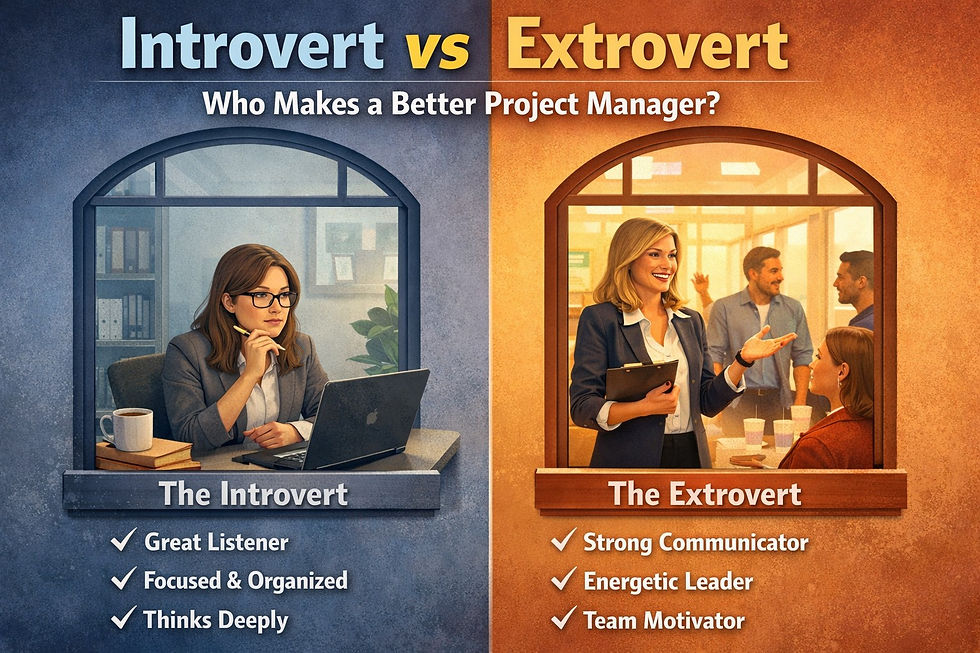
In modern enterprise environments where projects are increasingly complex, cross-functional, and deadline-driven the question is no longer simply “Who is better?” Instead, it becomes: “Which personality traits drive the most effective project leadership under specific conditions?”
Some projects demand meticulous planning, careful risk analysis, and strategic foresight. Others require dynamic stakeholder management, rapid collaboration, and decisive action under pressure. Understanding how introverted and extroverted leadership styles align with these demands is essential for optimizing project success.
Effective project management goes beyond task coordination and timeline tracking. It requires emotional intelligence, adaptability, conflict resolution skills, and the ability to inspire accountability across diverse teams. Personality influences how project managers handle uncertainty, respond to setbacks, manage conflict, and maintain momentum during challenging phases of delivery. The ability to balance assertiveness with empathy, strategy with execution, and independence with collaboration often separates average project managers from exceptional ones.
In this article, we will take a deeper look at the defining characteristics of introverts and extroverts in leadership roles and explore Introvert vs Extrovert Project Manager. We will analyze their communication styles, decision-making processes, team engagement strategies, and approaches to navigating organizational complexity. By exploring these critical dimensions, we aim to uncover the traits that truly contribute to effective project management and help organizations identify the leadership qualities that drive sustainable project success.
Understanding the Project Manager's Role in Organizations
Project managers are the backbone of any successful project, orchestrating various elements to ensure that goals are met within the constraints of time, budget, and scope. Their responsibilities often include planning, execution, monitoring, and closing projects. A project manager must be a multi-faceted individual, possessing not only technical skills but also strong interpersonal abilities, as they must coordinate with diverse teams and stakeholders. This role requires balancing multiple priorities and aligning team efforts towards a common goal.
Organizations often look for project managers who can adapt to different situations, leading teams through challenges and ensuring that everyone remains focused. The ability to motivate team members, manage conflicts, and communicate effectively with stakeholders is crucial. A project manager can significantly influence the atmosphere of the workplace, which in turn can impact the overall success of the project. Understanding how personality traits like introversion and extroversion affect these skills is vital for organizations aiming to optimize project management.
As project management becomes increasingly complex, the need for leaders who can navigate ambiguity while maintaining team cohesion is paramount. This calls for a deeper understanding of the characteristics that make effective project managers, particularly in the context of introversion and extroversion. By analyzing these traits, organizations can better assess the fit of their project managers, ultimately leading to improved project outcomes and greater organizational success.
Introverts vs Extroverts: Defining Key Characteristics
Introverts tend to recharge by spending time alone and often prefer deep, meaningful conversations over superficial small talk. They are typically reflective, thoughtful, and capable of focusing intently on tasks. This focus can be advantageous in project management, as introverted leaders may excel in planning and analyzing project details. They often take their time to evaluate information and consider various perspectives before making decisions, which can lead to thorough and well-considered outcomes.
On the other hand, extroverts thrive in social settings and gain energy from interacting with others. They are often seen as outgoing, enthusiastic, and comfortable in leadership roles. This sociability can be a significant asset in project management, as extroverted leaders are generally skilled at rallying teams, building relationships, and fostering a collaborative environment. Their ability to engage with team members can lead to a more dynamic team culture, where ideas flow freely and everyone feels included.
Both personality types bring unique strengths to the table. While introverts may excel in strategic planning and critical analysis, extroverts often shine in communication and team engagement. Understanding these fundamental characteristics can help organizations identify which type of project manager may be better suited for specific project requirements, thereby maximizing the potential for success.
Communication Styles: How They Impact Project Success
Effective communication is essential in project management, and the communication styles of introverts and extroverts can significantly influence team dynamics. Introverts tend to favor structured communication, preferring written forms such as emails or reports where they can articulate their thoughts clearly and thoughtfully. This can lead to well-documented project plans and updates, allowing teams to reference information easily.
Extroverts, conversely, thrive in verbal communication settings, often preferring face-to-face discussions or brainstorming sessions. Their enthusiastic approach to communication can encourage team participation and foster a collaborative atmosphere. However, extroverted leaders may sometimes dominate conversations, potentially leading to the overshadowing of quieter team members. Effective project managers must balance these communication styles, allowing all voices to be heard while still driving the project forward.
Ultimately, the impact of communication style on project success lies in the ability of the project manager to adapt their approach based on the team dynamics and project needs. Organizations benefit from project managers who can flexibly switch between communication methods to engage the entire team, ensuring that everyone remains aligned and informed throughout the project lifecycle.
Decision-Making Approaches: A Comparative Look
Decision-making is a critical skill for project managers, and introverts and extroverts approach this process differently. Introverts typically favor a more analytical approach, taking the time to gather information, consider options, and reflect on potential outcomes before reaching a conclusion. This careful deliberation can lead to well-informed decisions that take into account various factors and implications. However, this approach may also result in analysis paralysis, where too much reflection causes delays in action.
In contrast, extroverts often lean towards intuitive decision-making, relying on their gut feelings and the input of others to make choices quickly. Their confidence and willingness to take risks can lead to agile decision-making, especially in fast-paced environments. However, this can also result in hasty decisions that lack depth or thorough consideration of all aspects, potentially jeopardizing project goals.
For organizations, recognizing these different decision-making styles is essential. Effective project managers must find a balance between analytical and intuitive approaches, ensuring that decisions are both timely and well-considered. This may involve combining the strengths of both personality types, fostering an environment where team members feel comfortable sharing their insights and contributing to the decision-making process.
Team Dynamics: How Personality Shapes Collaboration
The dynamics of a project team can be heavily influenced by the personality traits of its members, including the project manager. Introverts often create a calm and focused atmosphere, as they encourage deep discussions and thoughtful contributions. Their ability to listen and provide space for others can help nurture a supportive team environment where all members feel valued. This is particularly advantageous in teams that benefit from careful planning and analysis before action.
On the flip side, extroverts can inject energy and enthusiasm into the team, promoting open dialogue and creative problem-solving. Their natural ability to connect with others fosters collaboration and can help break down silos within the team. However, it is essential for extroverted project managers to be mindful of quieter team members, ensuring that everyone has the opportunity to contribute and share their insights.
The effectiveness of project teams often depends on the successful integration of various personality types. Organizations can benefit from cultivating diverse teams that leverage the strengths of both introverted and extroverted members. By promoting an inclusive atmosphere that values different communication styles and collaboration techniques, project managers can enhance team dynamics, ultimately leading to better project outcomes.
Leadership Qualities: What Makes an Effective Manager?
Effective project managers possess a unique blend of leadership qualities that can be enhanced by their personality traits. Introverted leaders often demonstrate humility, self-awareness, and the ability to foster deep, authentic relationships. Their thoughtful nature allows them to approach leadership with empathy, often leading to trust and respect from team members. This can be especially effective in environments that require strong guidance and stability.
Extroverted project managers, on the other hand, typically exhibit assertiveness, charisma, and the ability to inspire others. Their energy can motivate teams and create a sense of shared purpose. Extroverts are often seen as more approachable, making it easier for team members to seek guidance or voice concerns. However, effective extroverted leaders must balance their energy with attentiveness, ensuring that they engage with all team members and not just those who are more vocal.
Ultimately, the effectiveness of a project manager is rooted in their ability to adapt their leadership style to fit the needs of their team and the project at hand. Organizations that recognize the diverse strengths of both introverted and extroverted leaders can foster a culture of inclusive leadership that drives project success.
The Importance of Emotional Intelligence in Management
Emotional intelligence (EI) is a crucial factor in the effectiveness of project managers, influencing their ability to navigate interpersonal relationships and manage team dynamics. Introverts often possess a high level of self-awareness, allowing them to reflect on their emotions and understand how they affect others. This ability can lead to thoughtful interactions and a supportive team environment, as introverted leaders may be more attuned to the feelings and needs of their team members.
Extroverts also benefit from emotional intelligence, particularly in their ability to read social cues and engage effectively with others. Their outgoing nature often allows them to connect with team members on a personal level, fostering camaraderie and open communication. However, they may need to work on active listening to ensure that they fully understand the emotions and perspectives of others, especially quieter team members.
Organizations that prioritize emotional intelligence in project management can enhance team collaboration and boost morale. Training and development programs focused on EI can help project managers, regardless of their personality type, to cultivate better relationships with their teams. This, in turn, can lead to improved project outcomes and a more positive work environment.
FAQ Section
What is the impact of personality traits on project management success?
Personality traits directly influence how project managers lead teams, communicate with stakeholders, and make strategic decisions. Introverts often excel in focused analysis, risk assessment, and reflective problem-solving, while extroverts bring energy, motivation, and strong interpersonal engagement. Understanding these traits allows organizations to align project managers with roles that maximize productivity, team performance, and project delivery success.
Can introverted project managers be effective leaders?
Yes, introverted project managers can lead highly effective teams. Their strengths lie in active listening, strategic planning, and thoughtful decision-making. They foster strong one-on-one relationships with team members, encourage collaboration, and maintain high levels of focus on project goals. In enterprise-scale projects, introverted leaders often shine in complex, high-stakes environments where attention to detail and risk mitigation are critical.
How do extroverted project managers contribute to team performance?
Extroverted project managers excel in environments requiring strong communication, stakeholder engagement, and team motivation. Their charisma and energy help build cohesive teams, resolve conflicts efficiently, and drive momentum on fast-paced projects. Extroverts are particularly effective in large-scale initiatives where collaboration across multiple departments and stakeholder groups is essential.
Which personality type handles project stress better?
Both personality types handle stress differently. Introverts typically process challenges internally, using reflection and structured planning to mitigate risks. Extroverts often seek external collaboration and actively communicate with their teams to navigate pressure. By understanding these approaches, organizations can leverage each type’s stress-management strengths to ensure consistent project performance and reduce operational risks.
How do introverts and extroverts approach decision-making?
Introverted project managers tend to analyze data thoroughly, consider all potential outcomes, and make well-informed, calculated decisions. Extroverted project managers often make quicker, dynamic decisions, leveraging input from stakeholders and team collaboration. Both approaches can be highly effective depending on the project’s complexity, urgency, and organizational culture.
Can a project manager be both introverted and extroverted?
Yes, many successful project managers display a balance of introverted and extroverted traits, often referred to as ambiverts. These individuals can adapt their leadership style to meet project needs, combining strategic thinking with strong interpersonal engagement, which enhances team performance and improves project outcomes.
How should organizations choose the right project manager personality type?
Organizations should assess project complexity, team dynamics, and stakeholder requirements. Introverted project managers may excel in analytical, detail-oriented projects, while extroverted leaders thrive in collaborative, fast-moving initiatives. Matching personality traits to project demands ensures higher efficiency, stronger team cohesion, and successful enterprise-scale project delivery.
The debate over whether introverts or extroverts make better project managers is not a simple one. Each personality type brings unique strengths and challenges to the role, contributing to the diverse tapestry of project management. Understanding the traits, communication styles, decision-making approaches, team dynamics, leadership qualities, and emotional intelligence associated with both introverts and extroverts can empower organizations to make informed choices in their hiring and development processes. Ultimately, a balance of both styles may be the key to achieving project success, fostering environments where all team members can thrive.
Conclusion - Introvert vs Extrovert Who Makes a Better Project Manager
The true measure of effective project management does not rest solely on personality type but on the ability to leverage individual strengths to drive results. Whether a project manager is introverted, extroverted, or a blend of both, success ultimately depends on strategic leadership, emotional intelligence, and the capacity to adapt to changing project demands. High-performing project managers understand how to balance communication, decision-making, stakeholder engagement, and risk management to deliver consistent, measurable outcomes.
Introverts often excel in thoughtful analysis, structured planning, and deep focus qualities that strengthen risk mitigation and long-term strategic alignment. Extroverts, meanwhile, frequently bring dynamic communication, team motivation, and strong stakeholder influence critical drivers of momentum and collaboration in fast-paced environments. Neither personality type is inherently superior; instead, effectiveness is determined by how well leadership traits align with project complexity, organizational culture, and business objectives.
For organizations seeking to optimize project performance, the key lies in recognizing that diverse leadership styles can produce exceptional results when supported by clear governance, defined processes, and a culture of accountability. Investing in leadership development, self-awareness, and adaptive communication skills enables project managers to maximize their strengths while mitigating potential blind spots.
Ultimately, successful project management is about delivering value on time, within budget, and aligned with strategic goals. By understanding the impact of introversion and extroversion on leadership effectiveness, organizations can make more informed hiring and development decisions, strengthen team dynamics, and drive sustainable project success. In an increasingly complex and competitive landscape, the most effective project managers are not defined by personality alone, but by their ability to lead with clarity, adaptability, and purpose.
External Source for Call-to-Action: For more insights on how personality affects team performance, check out this article on Harvard Business Review.


